Professional Food Processing Machinery Manufacturer


Dough Divider Machine: Essential Equipment for Bakery Production — learn how Yuerui Machinery supports your production with reliable equipment and engineering.
In the world of commercial baking, consistency is everything. Customers expect every loaf to be the same size, every bun to weigh the same, and every roll to bake uniformly. Behind this consistency lies a piece of equipment that many bakers consider the unsung hero of the bakery: the dough divider machine. This essential machine automates the portioning of bulk dough into equal pieces, eliminating the variability of manual dividing and ensuring that every product meets exact weight specifications. Whether you operate an artisan bakery producing a few hundred rolls per day or an industrial baking facility turning out tens of thousands of buns per hour, a dough divider machine is the foundation of consistent, efficient, and profitable bakery production. This comprehensive guide explores everything you need to know about selecting, operating, and maintaining the right dough divider for your bakery.
What Is a Dough Divider Machine?
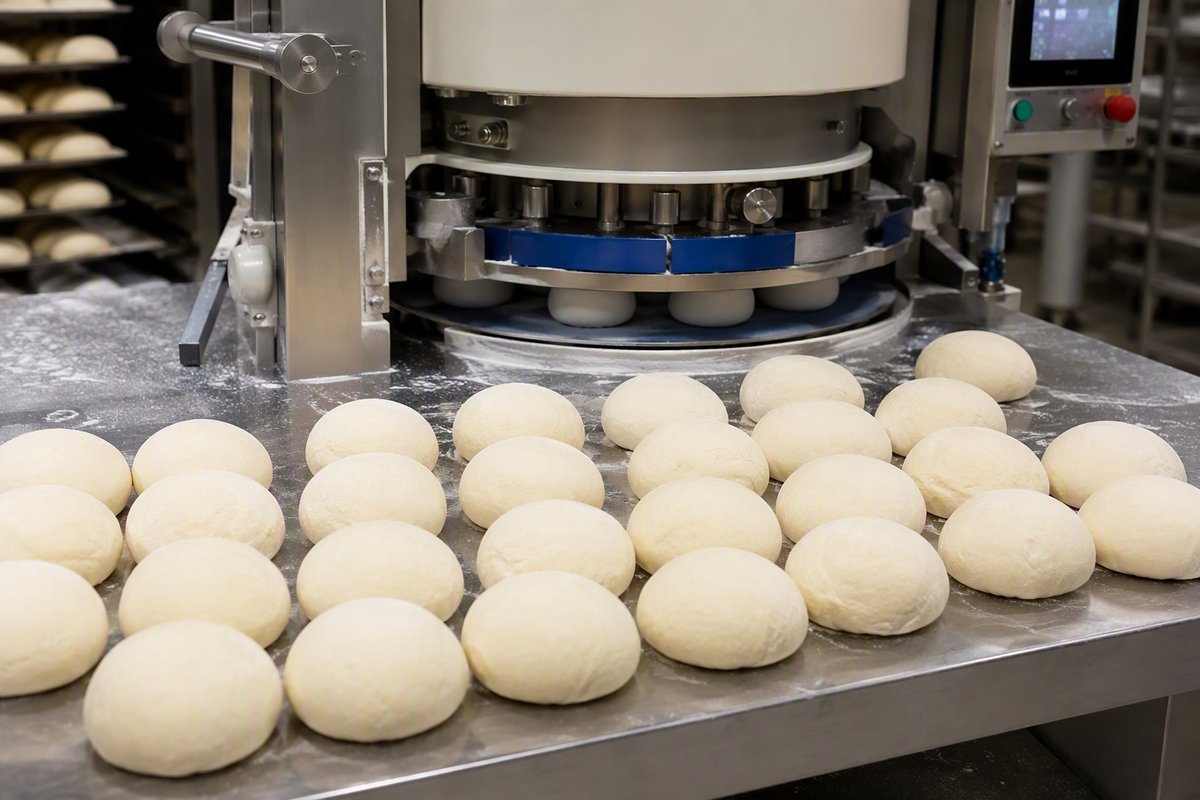
A dough divider machine is a specialized piece of commercial bakery equipment designed to cut a large mass of dough into equal, precisely weighed portions. Unlike manual dividing, where a baker estimates portion size by eye and hand, a dough divider machine uses mechanical or hydraulic action to extrude dough through a dividing mechanism that produces uniform pieces with every cycle. The result is consistent portion weight, uniform product size, and dramatic labor savings—benefits that directly impact both product quality and bakery profitability.
The basic operation of a dough divider machine follows a consistent principle across machine types. Bulk dough is loaded into a hopper or chamber, where it is pressurized by a piston, ram, or screw mechanism. This pressurized dough is then forced through a dividing head or cutting mechanism that portions it into individual pieces. The weight of each piece is determined by the volume of the dividing chamber and the density of the dough, which is why consistent dough density is essential for accurate portioning. Modern machines incorporate precision-adjustable portion controls that allow operators to fine-tune piece weight to within plus or minus 1-2 grams.
For commercial bakeries, the impact of a dough divider machine on operations is transformative. A single machine can replace 3-5 workers at the dividing station, produce portions with weight consistency that is impossible by hand, and maintain production speeds that keep up with downstream forming and baking equipment. Whether producing bread loaves, hamburger buns, dinner rolls, or pizza dough balls, a quality dough divider is the critical first step in a standardized bakery production line.
Types of Dough Divider Machines
The dough divider machine market encompasses several distinct categories, each optimized for specific production scales, dough types, and portioning requirements. Understanding these categories is essential for selecting equipment that matches your bakery’s needs.
1. Hydraulic Dough Dividers
Hydraulic dough dividers use hydraulic pressure to extrude dough through the dividing mechanism. This type of dough divider machine excels at handling a wide range of dough consistencies, from soft bun dough to stiff bread dough, because hydraulic pressure can be easily adjusted to match the dough’s resistance. Hydraulic machines are known for their gentle handling of dough, which preserves the gluten structure and produces better fermentation and baking results. They are the preferred choice for artisan bakeries and operations producing fermented bread products where dough quality is paramount. The Dough Divider Machine from Yuerui Machinery exemplifies this category, offering precise hydraulic portioning with adjustable weight settings.
2. Mechanical Dough Dividers
Mechanical dough dividers use a motor-driven cam and piston mechanism to portion dough. These machines are typically simpler in construction than hydraulic models, making them more affordable and easier to maintain. They are well-suited for medium-capacity operations producing standard bread and roll dough. While they may not offer the same gentle dough handling as hydraulic models, modern mechanical dividers incorporate design features that minimize dough stress, such as optimized piston speed profiles and rounded chamber surfaces that reduce friction.
3. Automatic Dough Divider and Rounder Lines
For operations that require both dividing and rounding in a single workflow, automatic divider-rounder lines combine both functions into one integrated system. After the dough divider machine portions the dough, the pieces are automatically transferred to a rounding mechanism that shapes them into smooth balls. This integration eliminates a manual transfer step, improving both speed and product consistency. These systems are ideal for operations producing round products like bread rolls, burger buns, and dough balls for pizza production.
4. Volumetric Dough Dividers
Volumetric dividers portion dough based on volume rather than weight, using a rotating chamber or piston that fills with dough and then discharges a measured volume. This approach is extremely fast and suitable for soft, consistent dough types. However, volumetric dividers are sensitive to variations in dough density—changes in hydration, fermentation level, or temperature can cause portion weight to drift. They are best suited for operations with tightly controlled dough formulations and processing conditions.
5. Industrial Dough Dividing Systems
For large-scale industrial bakeries, fully automated dough dividing systems integrate with proofing, forming, and baking lines to create a continuous production flow. These systems can process thousands of dough pieces per hour and often include features such as automatic dough feeding, inline weight checking, and computer-controlled portion adjustment. Industrial systems like the Automatic Pancake Forming Machine demonstrate how dividing and forming can be combined for specific product lines, offering a complete solution for high-volume specialty production.
Key Specifications to Consider
Selecting the right dough divider machine requires careful evaluation of several technical specifications that determine the machine’s suitability for your specific bakery operation.
Portion Weight Range
The range of dough piece weights a machine can produce is one of the most fundamental specifications. Commercial dividers typically handle portion weights from 30 grams to 1000 grams, with some industrial models extending to 2000 grams or more. Consider both your current product range and potential future products. If you produce hamburger buns (50-100g), dinner rolls (30-60g), and bread loaves (400-800g), you need a machine with a wide portion range or multiple dividing head options.
Portioning Accuracy
Accuracy, typically expressed as a percentage of the target weight, determines how closely each dough piece matches the specified weight. Commercial dough divider machine models typically achieve accuracy of plus or minus 1-3%. For premium products where exact weight is critical, look for machines with plus or minus 1% accuracy or better. Poor accuracy leads to product weight variability, which can result in regulatory compliance issues for packaged products and customer dissatisfaction for retail sales.
Production Capacity
Capacity is measured in pieces per hour and ranges dramatically across machine types. Small bakery dividers may produce 1,000-3,000 pieces per hour, while mid-range models handle 3,000-8,000 pieces per hour, and industrial systems can exceed 20,000 pieces per hour. When evaluating capacity, account for dough loading time, cleaning intervals, and the speed of downstream equipment. A divider that is significantly faster than your proofer or oven creates a bottleneck downstream, negating the benefit of high dividing speed.
Dough Compatibility
Different dough types present different challenges for a dough divider machine. Key dough characteristics to consider include:
- Hydration level: High-hydration doughs (65%+) are sticky and require machines with non-stick surfaces and gentle handling
- Dough stiffness: Stiff doughs (bagel, pretzel) require more dividing force and robust construction
- Fermentation stage: Fermented doughs are delicate and require gentle handling to preserve gas cells
- Inclusions: Doughs with seeds, nuts, or fruit pieces require wider dividing chambers and specialized blade materials
- Fat content: Rich doughs (brioche, croissant) can be greasy and require machines with fat-resistant seals
Hopper Capacity
The hopper capacity determines how much bulk dough the machine can hold at one time, which affects how frequently the operator must reload. Small dividers may have 20-30 kg hoppers, while industrial models can hold 100 kg or more. A larger hopper reduces loading frequency and allows for more continuous operation, but it also means the dough sits longer in the machine, which can affect fermentation for sensitive dough types.
Construction Material and Hygiene
All food contact surfaces must be food-grade stainless steel (AISI 304) or food-grade aluminum with appropriate coatings. The hopper interior, dividing chamber, and discharge area should be smooth, with rounded corners and continuous welds that prevent dough buildup and facilitate cleaning. Removable components for cleaning are essential—look for machines that allow tool-free disassembly of food contact parts. The frame and exterior should resist corrosion from cleaning chemicals and the humid bakery environment.
Adjustability and Changeover
The ease with which a dough divider machine can be adjusted for different portion weights and dough types is a critical operational consideration. Some machines require manual adjustment of the dividing chamber or piston stroke, which can take 5-15 minutes per changeover. Premium models offer digital portion adjustment that can be changed in seconds, and some can store multiple product recipes for instant recall. Frequent product changes justify the investment in rapid-changeover capability.
Comparison Table: Dough Divider Machine Types
The following table compares key specifications across the main categories of dough divider machine types:
| Feature | Hydraulic Divider | Mechanical Divider | Automatic Divider-Rounder | Industrial System |
| Portion Range | 30-1000g | 50-800g | 30-500g | 50-2000g |
| Accuracy | ±1-2% | ±2-3% | ±1-2% | ±0.5-1% |
| Capacity | 1,000-5,000 pcs/h | 2,000-6,000 pcs/h | 3,000-10,000 pcs/h | 10,000-30,000+ pcs/h |
| Dough Handling | Gentle | Moderate | Gentle | Variable |
| Best For | Artisan bread, fermented dough | Standard bread, rolls | Buns, rolls, balls | Industrial bakery lines |
| Hopper Capacity | 30-50 kg | 20-40 kg | 30-60 kg | 100+ kg |
| Changeover Time | 5-10 min | 5-15 min | 3-8 min | 1-5 min |
| Price Range | $1,500-$5,000 | $1,000-$3,000 | $3,000-$10,000 | $15,000-$80,000+ |
Applications and Use Cases
A dough divider machine finds application across virtually every segment of commercial baking. Understanding these applications helps illustrate the versatility and essential nature of this equipment.
Artisan and Craft Bakeries
Artisan bakeries producing hand-crafted breads use hydraulic dough dividers to portion sourdough, country bread, and specialty doughs with the gentle handling that preserves the delicate open crumb structure characteristic of artisan products. The weight consistency provided by a dough divider machine ensures that each loaf bakes uniformly and meets retail weight standards, while the labor savings allow skilled bakers to focus on shaping and finishing rather than repetitive dividing.
Industrial Bread Production
Large-scale bread factories rely on high-capacity dough dividing systems as the first step in automated production lines. These systems portion thousands of dough pieces per hour, feeding them directly into proofing and baking equipment. The consistency of machine-divided portions ensures uniform loaf weight and size, which is critical for automated packaging and retail compliance. Industrial dough divider machine systems often include inline weight checking and automatic portion adjustment to maintain tight weight tolerances over long production runs.
Hamburger and Hot Dog Bun Production
The production of hamburger and hot dog buns requires extremely precise dough portioning to ensure that every bun fits its packaging and meets fast-food specifications. Divider-rounder lines are commonly used in this application, combining the dough divider machine with an integrated rounding station that shapes each portion into a smooth ball before proofing and baking. The combination of accurate dividing and consistent rounding produces buns that are uniform in both weight and shape.
Pizza Production
Commercial pizza operations, from chain restaurants to frozen pizza manufacturers, use dough dividers to portion pizza dough balls that are then sheeted or pressed into pizza bases. Consistent dough ball weight is essential for producing pizzas of uniform size and thickness, which controls portion cost and ensures consistent baking. A dough divider machine can produce hundreds of identical dough balls per hour, far exceeding the speed and consistency of manual portioning.
Pastry and Sweet Goods Production
Bakeries producing sweet rolls, croissants, Danish pastry, and other sweet goods use dough dividers to portion the base dough before adding fillings and shaping. For these applications, gentle dough handling is critical to preserve the laminated structure of layered pastries. Rich, high-fat doughs require machines with appropriate seals and surface treatments to prevent sticking and contamination.
Complementary Equipment: Dough Sheeting
In many bakery operations, the dough divider machine works in tandem with a dough sheeter that rolls the divided portions into thin sheets for products like flatbreads, croissants, and pastries. The Commercial Dough Sheeter pairs naturally with a dough divider, creating a two-step workflow: dividing the dough into precise portions, then sheeting those portions to the required thickness. This combination is particularly common in operations producing flatbreads, pizza bases, and laminated pastries.
Maintenance Tips for Dough Divider Machines
A dough divider machine is a precision instrument that requires regular maintenance to sustain portioning accuracy and equipment reliability. The following maintenance practices will protect your investment and ensure consistent performance.
Daily Cleaning
After each production shift, the machine must be thoroughly cleaned to remove dough residue that can harden, ferment, or harbor bacteria. Disconnect power, remove all detachable food contact components, and wash them with warm water and food-safe detergent. Use a soft brush to remove dough from the dividing chamber, piston surfaces, and discharge chute. Avoid using metal scrapers or abrasive cleaners that can scratch stainless steel surfaces, as scratches create crevices where bacteria can accumulate. Sanitize all surfaces with an approved food-grade sanitizer and allow components to dry completely before reassembly.
Hydraulic System Maintenance
For hydraulic dough divider machine models, regular hydraulic system maintenance is essential. Check hydraulic oil levels weekly and top off with manufacturer-specified oil if needed. Inspect hydraulic hoses and fittings monthly for signs of leakage, cracking, or wear. Change hydraulic oil according to the manufacturer’s recommended interval, typically every 6-12 months depending on usage. Any hydraulic leak must be addressed immediately, as oil contamination of dough is a serious food safety hazard.
Piston and Chamber Maintenance
The piston and dividing chamber are the precision components that determine portioning accuracy. Inspect these components weekly for wear, scoring, or dough buildup. Even minor wear on the piston seal can cause dough leakage, leading to inaccurate portions. Replace piston seals and wipers according to the manufacturer’s schedule, and have spare seals on hand to minimize downtime. Keep the chamber surface smooth and clean—any roughness or buildup affects dough flow and portion consistency.
Lubrication and Mechanical Maintenance
Follow the manufacturer’s lubrication schedule for all moving parts, including cam followers, guide rails, bearings, and pivot points. Use only food-grade lubricants on any component that could potentially contact dough. Over-lubrication attracts dough dust and can cause contamination, so apply lubricant sparingly and wipe away excess. Check fastener torque monthly, as vibration from operation can loosen critical connections over time.
Calibration and Accuracy Verification
Regularly verify the portioning accuracy of your dough divider machine by weighing a sample of divided portions. Weigh at least 20 consecutive pieces and calculate the average and standard deviation. If accuracy drifts beyond acceptable limits, recalibrate the machine according to the manufacturer’s instructions. Accuracy drift can be caused by piston seal wear, dough density changes, or mechanical adjustment drift—identify and address the root cause rather than simply adjusting the target weight.
Buying Guide: How to Choose the Right Dough Divider Machine
Selecting the right dough divider machine for your bakery requires a structured evaluation of your production needs, dough characteristics, and operational constraints. The following step-by-step process will guide your decision.
Step 1: Define Your Product Range and Portion Specifications
List every product you produce or plan to produce, along with its target dough piece weight. This list defines the required portion weight range of your dough divider machine. If your products span a wide weight range (e.g., 30g rolls to 800g loaves), look for a machine with a broad adjustable range or multiple dividing head options. Products with very tight weight tolerances require machines with high accuracy specifications.
Step 2: Calculate Required Production Capacity
Determine your required capacity by calculating the total number of dough pieces needed per production shift. Consider peak production days, not just average days. Divide the total pieces by available production hours to get your required pieces per hour, then add a 20-30% buffer for setup, cleaning, and maintenance. Ensure the machine’s rated capacity comfortably exceeds this calculated requirement.
Step 3: Evaluate Your Dough Characteristics
Document the key characteristics of your dough: hydration level, stiffness, fat content, fermentation type, and any inclusions. This information determines which type of dough divider machine is compatible with your products. Soft, high-hydration doughs require gentle handling and non-stick surfaces. Stiff doughs need robust construction and powerful dividing mechanisms. Doughs with inclusions need chambers and blades that can accommodate particulates without damaging them.
Step 4: Consider Production Workflow Integration
Evaluate how the dough divider will integrate with your existing or planned production workflow. If you currently hand-shape divided portions, a simple divider may suffice. If you use automated rounding, proofing, or baking equipment, ensure the divider’s output rate and discharge configuration match the downstream equipment. Consider whether an integrated divider-rounder line would improve efficiency by eliminating a manual transfer step.
Step 5: Assess Space and Utility Requirements
Measure your available floor space, accounting for operator access, dough loading, and product discharge. Hydraulic dividers may require space for a hydraulic power unit. Verify that your electrical supply matches the machine requirements. Consider the location of your dough mixer and proofer—the divider should be positioned to minimize dough transfer distance between these stations.
Step 6: Evaluate Changeover and Adjustability
If you produce multiple products with different portion weights, evaluate how quickly and easily each candidate machine can be converted between products. Machines with digital portion adjustment and recipe storage can change products in under a minute, while machines requiring manual mechanical adjustment may need 10-15 minutes per changeover. Frequent product changes justify the investment in rapid-changeover capability.
Step 7: Prioritize Hygiene and Cleaning
Assess the cleanability of each candidate machine. How many components must be removed for thorough cleaning? Are special tools required? How long does a complete clean take? Look for machines with tool-free disassembly, smooth food contact surfaces, and sanitary design. In bakeries producing multiple products with different allergen profiles, the ability to thoroughly clean between products is a food safety requirement, not just a convenience.
Step 8: Calculate Total Cost of Ownership
Factor in all costs over a 7-10 year period:
- Purchase price
- Spare parts (piston seals, wipers, blades)
- Hydraulic oil (for hydraulic models)
- Electricity consumption
- Cleaning and maintenance labor
- Estimated repair costs
- Downtime cost during maintenance
A more expensive machine with better reliability, easier cleaning, and longer-lasting components may have a significantly lower total cost of ownership than a cheaper alternative that requires frequent repairs and lengthy cleaning procedures.
Common Mistakes to Avoid
- Choosing capacity too close to current needs: Bakeries grow, and a machine that barely meets current capacity will become a bottleneck. Always build in growth headroom of at least 25-30%.
- Ignoring dough compatibility: Not all dividers handle all dough types. Verify that the machine is compatible with your specific dough characteristics before purchasing.
- Neglecting accuracy verification: Portioning accuracy drifts over time. Establish a regular accuracy checking routine to catch and correct drift before it affects product quality.
- Inadequate cleaning between products: Allergen cross-contamination is a serious food safety risk. Thoroughly clean the machine between products with different allergen profiles.
- Overlooking operator training: A dough divider is a precision machine that requires proper operation to achieve optimal results. Train operators thoroughly on setup, adjustment, cleaning, and safety procedures.
- Skipping preventive maintenance: Reactive maintenance—waiting for something to break—is always more expensive than preventive maintenance. Follow the manufacturer’s maintenance schedule diligently.
Industry Trends and Innovations
The dough divider machine market continues to evolve, driven by demands for greater accuracy, flexibility, and automation. Several trends are shaping the future of this equipment category:
Digital Portion Control: Modern dividers increasingly incorporate digital servo motors and load cells that enable real-time portion weight adjustment. These systems can automatically compensate for changes in dough density, maintaining tight weight tolerances without operator intervention. Some advanced systems can even predict and correct for density trends based on production data.
Hygienic Design Improvements: Manufacturers are designing dividers with fewer crevices, smoother surfaces, and IP65-rated electrical components that enable wash-down cleaning. Tool-free disassembly and color-coded components for allergen management are becoming standard features on premium models.
Industry 4.0 Integration: Industrial dividers are increasingly equipped with IoT sensors that monitor machine health, track production data, and enable predictive maintenance. This connectivity reduces unplanned downtime and provides production managers with real-time visibility into machine performance and product quality.
Conclusion
A dough divider machine is not just a piece of equipment—it is the foundation of consistent, efficient, and profitable bakery production. By automating the most repetitive and variable step in the baking process, a quality dough divider ensures that every product meets exact weight specifications, bakes uniformly, and satisfies customer expectations. From small artisan bakeries to massive industrial production facilities, the right dough divider machine transforms dough portioning from a labor-intensive bottleneck into a streamlined, reliable production step.
The key to a successful investment lies in thoroughly understanding your production requirements and matching them to the right machine type, specifications, and manufacturer support. By carefully evaluating portion range, accuracy, capacity, dough compatibility, and total cost of ownership, you can select a dough divider that will deliver consistent performance and a strong return on investment for years to come. Remember that this is a long-term investment in your bakery’s quality and efficiency—focus on alignment with your specific needs, backed by solid manufacturer support. With proper selection, operation, and maintenance, a quality dough divider machine from a reputable manufacturer like Yuerui Machinery will be a cornerstone of your bakery’s success.