Professional Food Processing Machinery Manufacturer


Frozen Meat Slicers for Hotpot Restaurants: Blade and Thickness Guide — learn how Yuerui Machinery supports your production with reliable equipment and engineering.
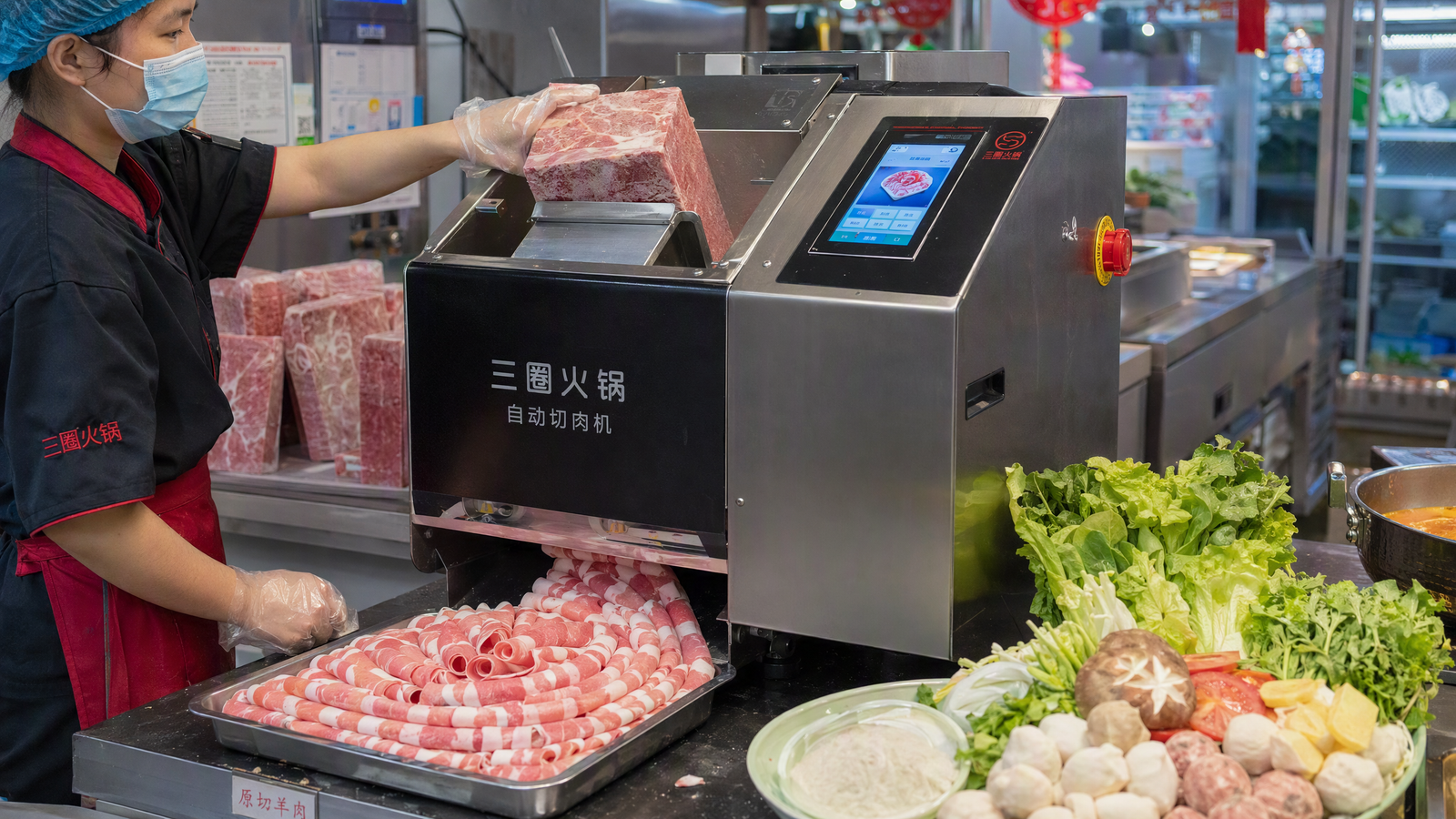
Choosing the right frozen meat slicer hotpot restaurant can make the difference between a smooth-running foodservice operation and one plagued by inconsistent portions, labor bottlenecks, and food safety audit findings. This guide walks operators through the key specifications, compliance requirements, and practical considerations that matter most when investing in professional meat processing equipment for institutional, retail, or restaurant environments.
Why Equipment Selection Matters
In high-volume foodservice settings, manual cutting simply cannot keep up with demand while maintaining the portion consistency that customers and regulators expect. According to the FDA Food Code, food establishments must use equipment that is designed and constructed to be easily cleaned and sanitized. The right frozen meat slicer hotpot restaurant addresses this requirement while also improving throughput, reducing labor costs, and standardizing portion quality.
Operators who skip proper equipment planning often face recurring issues: uneven portions that trigger customer complaints, sanitation gaps that fail health inspections, and operator fatigue that leads to workplace injuries. A well-chosen machine eliminates these problems from day one.
Key Specifications to Evaluate
When comparing equipment options for your operation, pay close attention to these critical specifications:
Throughput Capacity
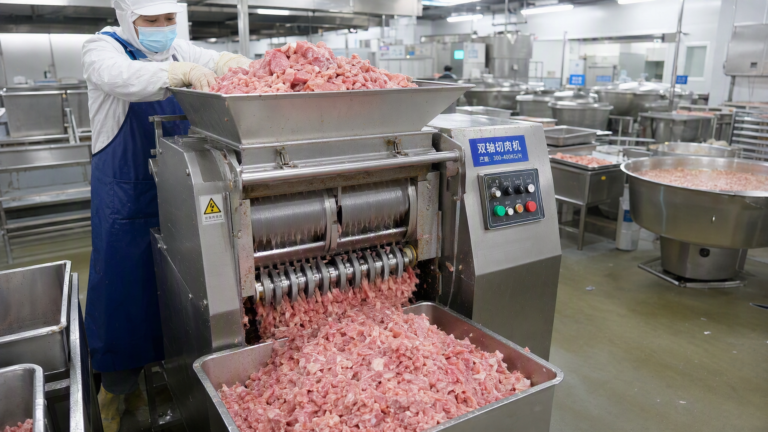
Match the machine’s rated throughput to your peak service window volume, not your average daily volume. A common mistake is sizing equipment to average demand, then discovering it cannot handle the rush. For institutional operations, the USDA food and nutrition guidelines provide reference values for meal planning that can help you calculate realistic per-meal meat processing requirements.
Cutting Precision
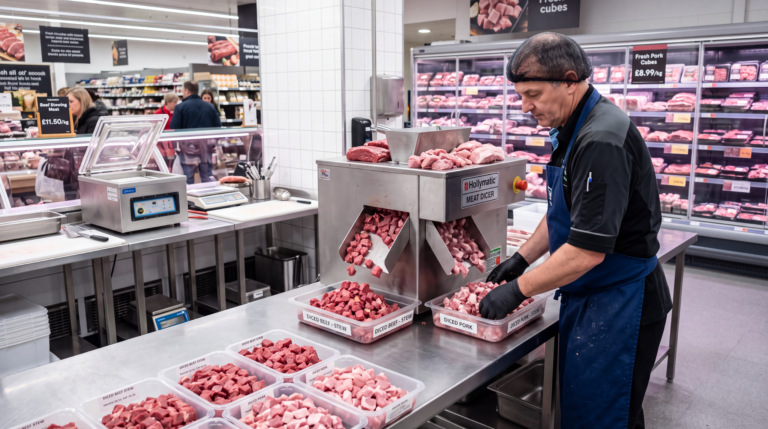
Portion weight variance directly affects food cost and customer satisfaction. Look for machines that specify cut tolerance in millimeters. Premium equipment achieves plus or minus 1mm or better, while entry-level machines may vary by 3-5mm. Over a week of high-volume service, that variance adds up to significant product waste.
Construction and Materials
All food contact surfaces must be food-grade stainless steel (typically AISI 304 or 316). The NSF International certification mark is the industry standard for food equipment sanitation compliance. Avoid machines with painted surfaces, zinc-coated components, or plastic parts in the cutting zone.
Safety Features
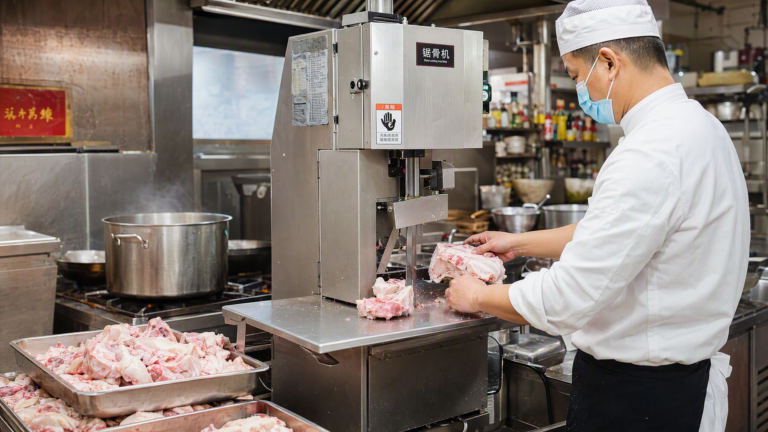
Minimum safety features should include interlocked guards that stop the blade when opened, two-hand operator controls, emergency stop buttons within arm’s reach, and blade braking that stops rotation within 4 seconds of power cutoff. These features are not optional luxuries – they are baseline requirements under most national workplace safety regulations.
Space and Layout Considerations
Before purchasing, measure your available floor space and counter space carefully. Consider not just the machine footprint but also the operator workspace, infeed clearance for product, and discharge clearance for containers. For compact kitchens – such as school cafeterias, restaurant back-of-house areas, or small supermarket backrooms – a space-saving model may be more practical than a high-capacity unit that requires extensive layout modifications.
Our product catalog includes compact-footprint models specifically designed for space-constrained environments. These machines maintain professional-grade cutting performance while fitting into standard counter or floor spaces.
Sanitation and Cleaning Protocol
Daily cleaning is non-negotiable in any foodservice meat operation. The HACCP (Hazard Analysis Critical Control Point) framework requires documented cleaning procedures for all food contact equipment. When evaluating machines, look for:
- Tool-free disassembly for blade and guard removal
- Smooth surfaces with no hidden crevices where bacteria can accumulate
- IP65 or higher rated control panels for wash-down compatibility
- Stainless steel construction throughout, including frame and legs
- Quick-release blade mechanisms for efficient sanitizing between product changeovers
Machines that require 30 minutes or more for daily cleaning are a hidden labor cost. Premium models can be fully sanitized in under 10 minutes, saving an hour of labor per week or more.
Regulatory and Compliance Overview
Foodservice equipment must comply with multiple regulatory frameworks depending on your location and operation type. The World Health Organization food safety standards provide the international baseline. In practice, most operators need to satisfy:
- Local health department codes (typically based on the FDA Food Code in the US)
- NSF/ANSI Standard 8 for commercial electric food cutting machines
- OSHA workplace safety requirements for machine guarding
- HACCP documentation for equipment cleaning and maintenance
- For school foodservice: USDA Child Nutrition Program equipment standards
The Codex Alimentarius, jointly managed by FAO and WHO, sets international food standards that are increasingly referenced in procurement specifications worldwide.
Operator Training and Adoption
Even the best equipment fails if operators are not properly trained. Plan for a structured training program that covers safe operation, cleaning procedures, blade change protocols, and basic troubleshooting. For institutional operations with staff turnover, choose machines with intuitive touchscreen interfaces and pre-loaded recipe storage that minimize the learning curve for new operators.
We provide comprehensive operator training as part of every equipment installation. Contact our team to learn about training options for your operation.
Real-World Application
To see how these principles translate into practice, read our related project case study where a customer deployed this type of equipment in a real foodservice operation. The case study includes installation details, throughput data, and ROI figures from the first 60 days of operation.
You can also explore our full range of meat processing equipment or browse additional project case studies from foodservice operators worldwide.
Total Cost of Ownership
Beyond the purchase price, calculate the total cost of ownership over a 5-year horizon:
- Energy consumption (check motor kW rating against your utility costs)
- Blade and wear part replacement schedule (typically every 6-12 months)
- Scheduled maintenance service visits
- Cleaning labor time multiplied by your hourly labor cost
- Insurance and regulatory compliance costs
A machine that costs 20% more upfront but cleans 50% faster and lasts 3 years longer is almost always the better investment. Learn more about our company and manufacturing standards to understand why our equipment is built for long-term value.
Conclusion
Selecting the right frozen meat slicer hotpot restaurant requires balancing throughput, precision, safety, sanitation, space, and budget. By evaluating each of these factors systematically and choosing equipment from a reputable manufacturer with proven foodservice experience, operators can make an investment that pays back through improved consistency, reduced labor, and audit-ready compliance for years to come.
Ready to find the right equipment for your operation? Contact our team for a free consultation, or browse our complete product catalog to compare specifications and find the model that matches your requirements.