Professional Food Processing Machinery Manufacturer

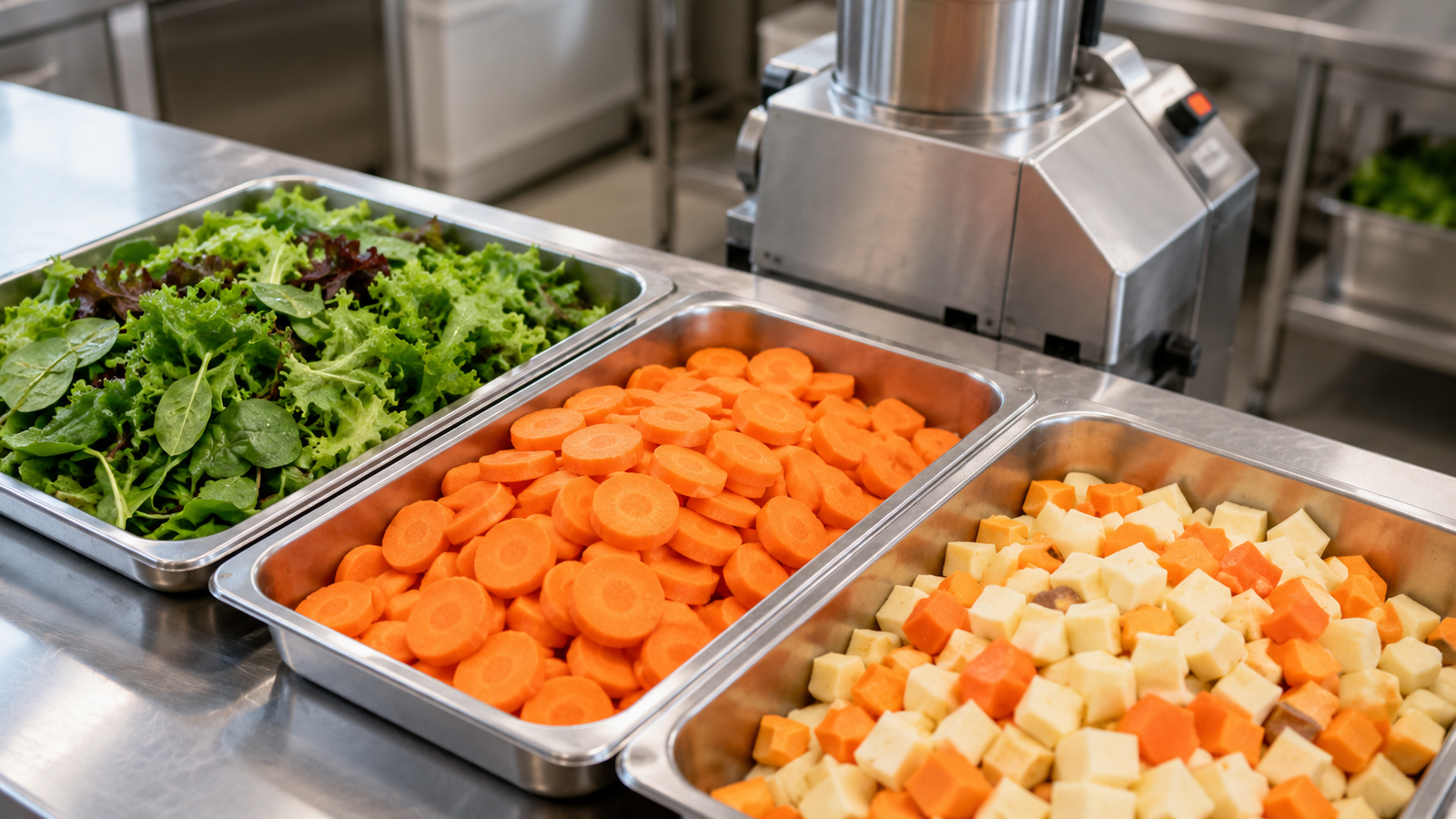

A kitchen processing leafy and root vegetables should not rely on a single statement that a cutter is multifunctional. Different products and required shapes need their own confirmation. The proposed solution is a product-to-cut matrix that separates what the supplier lists from what has been approved for the quoted configuration.
Define the food before choosing the tool
List each vegetable, its incoming preparation condition and the required finished form. Use representative samples or photographs. A slice, shred, cube and segment are different requirements; they should not be merged into one unspecified cutting task. Ask the supplier which material characteristics need a closer sample review.
Yuerui's local vegetable-cutter introduction mentions several cut forms and lists models 20, 801 and 60. It does not assign every form to every listed model. A responsible proposal therefore needs a model-and-tool response for each row of the customer's matrix.
Identify preparation outside the cutter
Record which products require separate washing, peeling, trimming or other preparation. The potato washer is a relevant discussion for certain root-material projects, but it should not be presented as a universal washer for all leafy vegetables. Ask which operation each proposed machine performs and what remains outside the quote.
Describe receiving containers and the movement from preparation to cutting. Keep product identification and the site's approved handling arrangements with the responsible process team. Do not assume the cutter includes weighing, sorting or batch tracking.
Evaluate selected combinations
Choose representative product-and-cut combinations for evaluation. Record the tool, material condition and requested dimensions with the observations. A demonstration on one root vegetable does not automatically validate another product or a leafy material. Keep any result limited to the conditions actually assessed.
The enquiry should ask Yuerui to mark each matrix row as proposed, confirmed by documentation, evaluated or still unresolved. This provides a practical way to discuss one versatile station versus separate configurations. It also avoids promising that every named vegetable and cut form can be supplied by one machine without the necessary supporting evidence.
Make each matrix row specific enough to evaluate
A useful row identifies the vegetable, its preparation condition, the requested shape and the dimensions relevant to the customer's next operation. Ask for a sample or drawing where the description is ambiguous. A menu name such as mixed vegetables is not a sufficient machine specification because it can hide several different cutting tasks and incoming materials.
Ask the supplier to assign a model and tool to each row, or to identify why more information is needed. The answer should distinguish general series descriptions from the confirmed contents of the actual offer. A reference to multifunctional cutting does not establish that every requested combination belongs to every listed model.
Separate preparation questions from cutting questions
If a root vegetable is washed or peeled before cutting, identify that stage and its owner. For leafy materials, ask what preparation and incoming form the proposed cutter requires. Do not extend the potato-washer description to another material simply because both are vegetables. The supplier should confirm the actual application rather than rely on a broad category label.
The receiving arrangement should also be recorded. Identify who collects the product and what the next operation expects. Where sorting, portioning or another step is required, keep it outside the cutter's scope unless explicitly included. This prevents the equipment proposal from implying functions that are not described in the confirmed configuration.
Preserve untested combinations in the review
The evaluation plan may begin with selected representative rows, but the record should show which remaining combinations are not yet assessed. Explain why the chosen samples are relevant and what differences would require another review. A demonstration should not silently approve every vegetable or shape in the customer's entire menu.
The final matrix should connect each proposed application with its equipment, tools and evidence basis. Ask the supplier to reconcile it with the quotation and supporting documents. This provides a practical way to discuss versatility without claiming universal compatibility or inventing results for materials that were never part of an evaluation.
The purchaser can use the matrix when requesting an additional vegetable or cut. Add a new row rather than overwriting the original requirement, and ask the supplier to identify the evidence needed for that combination. This retains the actual scope of the original decision and avoids treating a new menu requirement as automatically approved by an earlier demonstration.