Professional Food Processing Machinery Manufacturer


Commercial Dough Sheeter: Essential Equipment for Bakery and Pastry Production — learn how Yuerui Machinery supports your production with reliable equipment and engineering.
A commercial dough sheeter is one of the most versatile and indispensable pieces of equipment in any professional bakery, pastry shop, or food production facility. Its primary function—rolling dough into uniform, thin sheets—is fundamental to producing a wide range of baked goods, from flaky croissants and puff pastries to dumpling wrappers and pizza bases. For any operation that processes dough in commercial quantities, a dough sheeter dramatically improves consistency, reduces labor, and expands production capabilities. This guide covers everything you need to know about commercial dough sheeters, including types, key specifications, applications, maintenance, and buying tips.
What Does a Commercial Dough Sheeter Do?
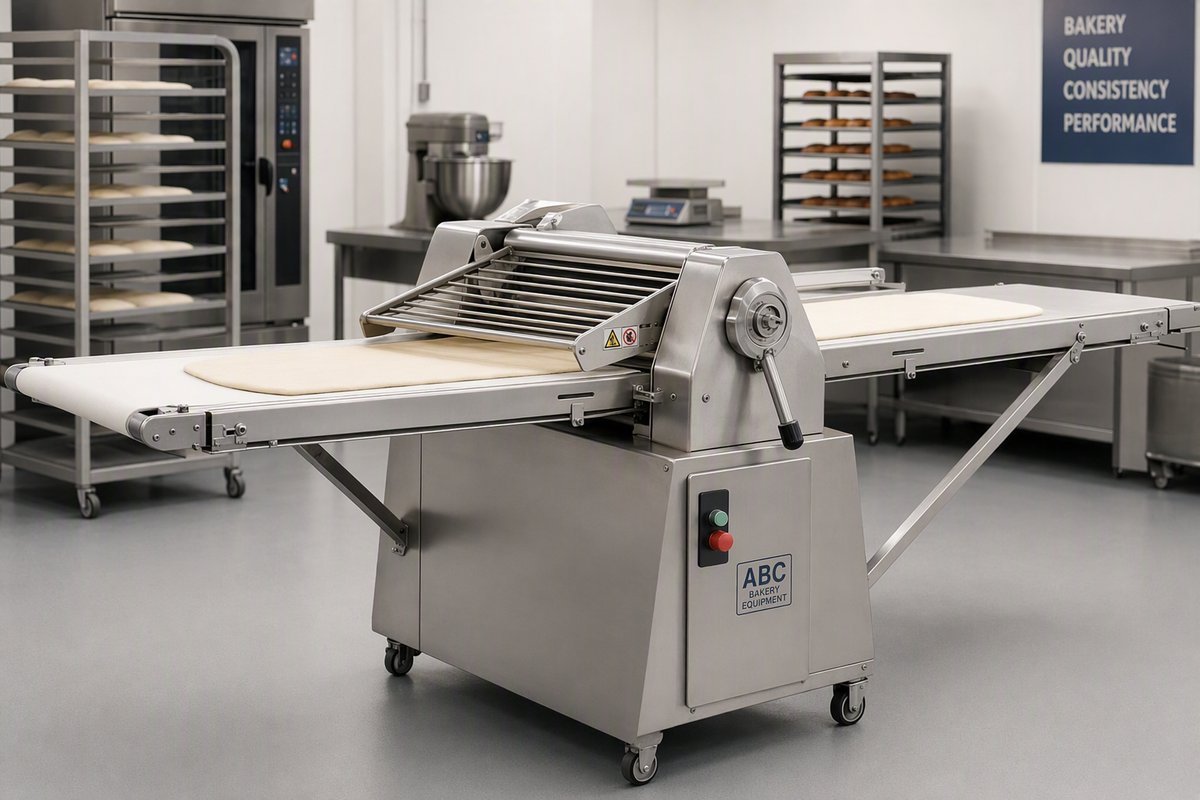
A dough sheeter, also known as a dough roller or pastry sheeter, is a machine that passes dough between two or more rollers to flatten it into a continuous, uniform sheet. The rollers are adjustable, allowing the operator to control the final thickness of the dough. This mechanical sheeting process offers several critical advantages over manual rolling with a rolling pin:
- Uniform thickness – The machine produces sheets with consistent thickness across the entire surface, which is essential for even baking and professional product appearance.
- Speed and efficiency – A commercial dough sheeter can process a batch of dough in seconds that would take several minutes to roll by hand.
- Reduced labor strain – Manual rolling is physically demanding and can lead to repetitive strain injuries among bakery staff. A sheeter eliminates this burden.
- Consistent quality – Mechanical sheeting applies even pressure, producing a dough sheet with uniform gluten development and texture.
- Versatility – A single sheeter can handle a wide range of dough types and thicknesses, from paper-thin phyllo to thick pizza bases.
The commercial dough sheeter from Yuerui Machinery is engineered for precisely these benefits, offering adjustable thickness settings and robust construction suitable for continuous commercial use.
Types of Commercial Dough Sheeters
Commercial dough sheeters are primarily categorized by their form factor and operational mechanism. The two main types are tabletop models and floor-standing (floor model) sheeters.
Tabletop Dough Sheeters
Tabletop models are compact machines designed to sit on a counter or workbench. They are ideal for small bakeries, pastry shops, and restaurants with limited floor space and moderate production volumes. Key characteristics include:
- Compact footprint, typically fitting on a standard workbench
- Lower production capacity, suitable for batch processing
- Manual dough feeding and sheet collection
- Lower price point, making them accessible to small businesses
- Generally lighter construction, suited for softer doughs
Floor-Standing Dough Sheeters
Floor-standing models are larger, more powerful machines designed for continuous commercial production. They are the standard choice for industrial bakeries, pastry factories, and central commissary kitchens. Key characteristics include:
- Larger roller width, accommodating bigger dough batches
- Higher production capacity, supporting continuous or near-continuous operation
- More powerful motors capable of handling firmer doughs and larger quantities
- Adjustable conveyor belt speed for precise control
- Sturdier construction with heavy-duty frames for stability during high-volume production
- Some models include reversible belt direction for multi-pass sheeting without repositioning the dough
| Feature | Tabletop Sheeter | Floor-Standing Sheeter |
|---|---|---|
| Roller width | 200–300 mm | 350–600 mm |
| Production capacity | Low to moderate | High |
| Motor power | 0.25–0.55 kW | 0.75–2.2 kW |
| Thickness range | 0.5–25 mm | 0.5–30 mm |
| Best for | Small bakeries, pastry shops | Industrial bakeries, factories |
| Price range | Entry-level | Mid to premium |
Key Specifications to Consider
Roller Width
Roller width is one of the most important specifications, as it determines the maximum width of the dough sheet the machine can produce. For bakeries producing large pastries, pizza bases, or production-line quantities of dumpling wrappers, a wider roller (400 mm or more) is essential. Narrower rollers (200–300 mm) are sufficient for smaller pastries and individual portions.
Thickness Adjustment Range
The thickness adjustment range determines the variety of products you can produce. A wide range—from 0.5 mm for thin wrappers to 25–30 mm for thick dough slabs—provides maximum versatility. Look for machines with precise, clearly marked thickness settings that produce repeatable results. Some advanced models offer digital thickness controls with memory presets for different products.
Motor Power
Motor power affects the machine’s ability to handle stiff doughs and large quantities. Underpowered motors may struggle with thick, cold dough, resulting in uneven sheets or motor overheating. For commercial operations processing firm doughs or running multiple shifts, choose a machine with adequate motor power (0.75 kW or higher for floor-standing models).
Conveyor Belt System
The conveyor belt moves the dough through the rollers and collects the sheeted dough. Key considerations include belt material (food-grade, easy to clean), belt width (should match or exceed roller width), and belt speed control. Reversible belt direction is a valuable feature that allows the operator to pass the dough through the rollers multiple times in alternating directions for more uniform sheeting.
Build Material and Hygiene Design
Food-grade stainless steel construction (304 or 316) is essential for durability and food safety compliance. Inspect the machine’s design for ease of cleaning—look for smooth surfaces, minimal crevices, and removable guards. The rollers themselves should be made from food-grade material (stainless steel or food-grade chrome-plated steel) and be resistant to corrosion from acidic dough ingredients.
Applications of a Commercial Dough Sheeter
A commercial dough sheeter is remarkably versatile, serving as a multi-purpose tool across numerous product categories. Understanding these applications helps you maximize the return on your equipment investment.
Puff Pastry and Croissant Production
Puff pastry and croissants rely on the lamination process—layering dough and butter through repeated folding and sheeting. A dough sheeter is essential for creating the thin, even layers that produce the characteristic flaky texture. The sheeter’s ability to apply consistent pressure ensures uniform butter distribution and layer formation, which is nearly impossible to achieve by hand at commercial volumes.
Dumpling and Wonton Wrappers
Producing uniform dumpling and wonton wrappers is a key application for dough sheeters in Asian food production. The machine produces thin, consistent sheets that can be cut into wrapper-sized squares or circles. For factories producing frozen dumplings, a sheeter is often paired with a dumpling making machine to create a complete production line.
Pizza Base Production
Dough sheeters produce uniform pizza bases with consistent thickness, which ensures even baking and professional presentation. Many pizzerias and frozen pizza manufacturers use sheeters specifically for this purpose, as hand-stretching pizza dough at commercial volumes is labor-intensive and inconsistent.
Flatbread and Pancake Production
Flatbreads such as roti, chapati, and tortillas, as well as pancakes, can be produced using a dough sheeter. For high-volume flatbread production, a sheeter is often paired with a forming and cooking machine. The automatic pancake forming machine automates the forming stage for flatbread and pancake products.
Bread and Bun Dough Preparation
While bread is typically not sheeted in its final form, a dough sheeter is used in the preparation stage for certain bread types, such as laminated breads and filled breads. Additionally, for operations that portion bread dough, a dough divider machine works in tandem with a sheeter to create uniform portions for buns, rolls, and specialty breads.
Phyllo and Strudel Dough
The extremely thin sheets required for phyllo dough and Austrian strudel demand a sheeter capable of reaching very thin settings (0.5 mm or less). This is a specialized application that requires a high-quality machine with precise thickness control and a gentle sheeting action to avoid tearing the delicate dough.
Maintenance Tips for Commercial Dough Sheeters
Regular maintenance is critical for ensuring the longevity, safety, and performance of your dough sheeter. Establish a maintenance routine based on the following guidelines:
Daily Cleaning
- Remove all dough residue from rollers, conveyor belts, and scrapers after each production session.
- Use a plastic scraper (not metal) to remove dried dough from roller surfaces to avoid scratching.
- Wipe all surfaces with a clean, damp cloth and food-safe sanitizer.
- Dry all components thoroughly to prevent rust and bacterial growth.
- Never use a high-pressure water hose on the machine, as water can penetrate motor housings and electrical components.
Weekly Maintenance
- Inspect conveyor belts for wear, cracking, or misalignment. Replace damaged belts promptly.
- Check roller surfaces for scratches, dents, or corrosion that could affect dough quality or food safety.
- Lubricate bearings and moving parts with food-grade lubricant per the manufacturer’s schedule.
- Inspect belt tension and adjust if necessary. Loose belts cause uneven sheeting; overly tight belts cause premature wear.
- Tighten all bolts and fasteners, as vibration during operation can loosen connections over time.
Monthly and Seasonal Maintenance
- Inspect the thickness adjustment mechanism for smooth operation and accurate calibration.
- Check motor ventilation and cooling fans for dust buildup; clean as needed to prevent overheating.
- Examine electrical cables and connections for signs of wear, fraying, or heat damage.
- Review the maintenance log and schedule any overdue service items.
- Order replacement parts proactively for components approaching the end of their service life.
Following a structured maintenance program not only extends the machine’s service life but also ensures that your products consistently meet quality standards and food safety requirements.
Buying Tips: How to Choose the Right Commercial Dough Sheeter
Selecting the right dough sheeter requires careful consideration of your production needs, facility constraints, and budget. Follow this buying checklist:
- Assess your production volume – Calculate how many kilograms of dough you need to sheet per day. High-volume operations require floor-standing models with wider rollers.
- List your product types – Identify all products you plan to produce. This determines the required thickness range and roller width. Diverse product ranges demand wider thickness ranges and multiple roller settings.
- Measure your available space – Tabletop models are ideal for tight spaces. Floor-standing models require adequate clearance for operation, cleaning, and maintenance on all sides.
- Check power supply compatibility – Verify that the machine’s voltage and phase match your facility’s electrical system. Most commercial sheeters use 220V single-phase or 380V three-phase power.
- Evaluate build quality – Inspect the construction material, roller quality, and frame stability. Look for food-grade stainless steel construction and robust frames that minimize vibration.
- Compare features – Look for adjustable thickness controls, reversible belt direction, variable speed, and safety features such as emergency stop buttons and safety guards.
- Verify certifications – Ensure the machine carries relevant food safety certifications (CE, FDA, ISO) for your market.
- Assess after-sales support – Choose a supplier that offers warranty, spare parts availability, and technical support. Downtime on a critical production machine can be costly.
- Request references – Ask the supplier for customer references, particularly from businesses with similar production profiles to yours.
- Calculate total cost of ownership – Factor in purchase price, shipping, installation, training, maintenance, and energy costs over the expected service life of the machine.
For expert guidance on selecting a dough sheeter that matches your specific production requirements, contact Yuerui Machinery for a personalized consultation.
Common Mistakes to Avoid When Buying a Dough Sheeter
Choosing a Machine That Is Too Small
Purchasing a tabletop model when your production volume requires a floor-standing unit leads to bottlenecks, overheating, and premature wear. Always size up, not down, when in doubt.
Ignoring Thickness Range Requirements
If you plan to produce both thin phyllo dough and thick bread dough slabs, ensure the machine’s thickness range covers both extremes. A narrow range limits your product variety and may require a second machine.
Overlooking Roller Quality
The quality of the rollers directly affects dough quality. Poor-quality rollers may develop surface imperfections that transfer to the dough, or they may corrode over time. Always inspect roller material and finish quality before purchasing.
Neglecting Safety Features
Dough sheeters have powerful rollers that can cause serious injury. Ensure the machine includes safety features such as emergency stop buttons, finger guards, and thermal overload protection. Train all operators on safe operation procedures.
Conclusion
A commercial dough sheeter is far more than a convenience—it is an essential piece of equipment that directly impacts product quality, production efficiency, and operational scalability for bakeries, pastry shops, and food production facilities. By understanding the different types of sheeters, evaluating key specifications, recognizing the broad range of applications, implementing a thorough maintenance program, and following a systematic buying process, you can select a machine that meets your current needs and supports your future growth. The right dough sheeter transforms dough processing from a labor-intensive, inconsistent operation into a streamlined, reliable, and scalable production capability. Whether you are producing artisanal croissants, frozen dumpling wrappers, or industrial quantities of pizza bases, investing in the right commercial dough sheeter is a decision that pays dividends in product quality, labor savings, and production capacity for years to come.