Professional Food Processing Machinery Manufacturer


Chicken Dicing Machine Buying Guide: 7 Specs That Actually Matter — learn how Yuerui Machinery supports your production with reliable equipment and engineering.
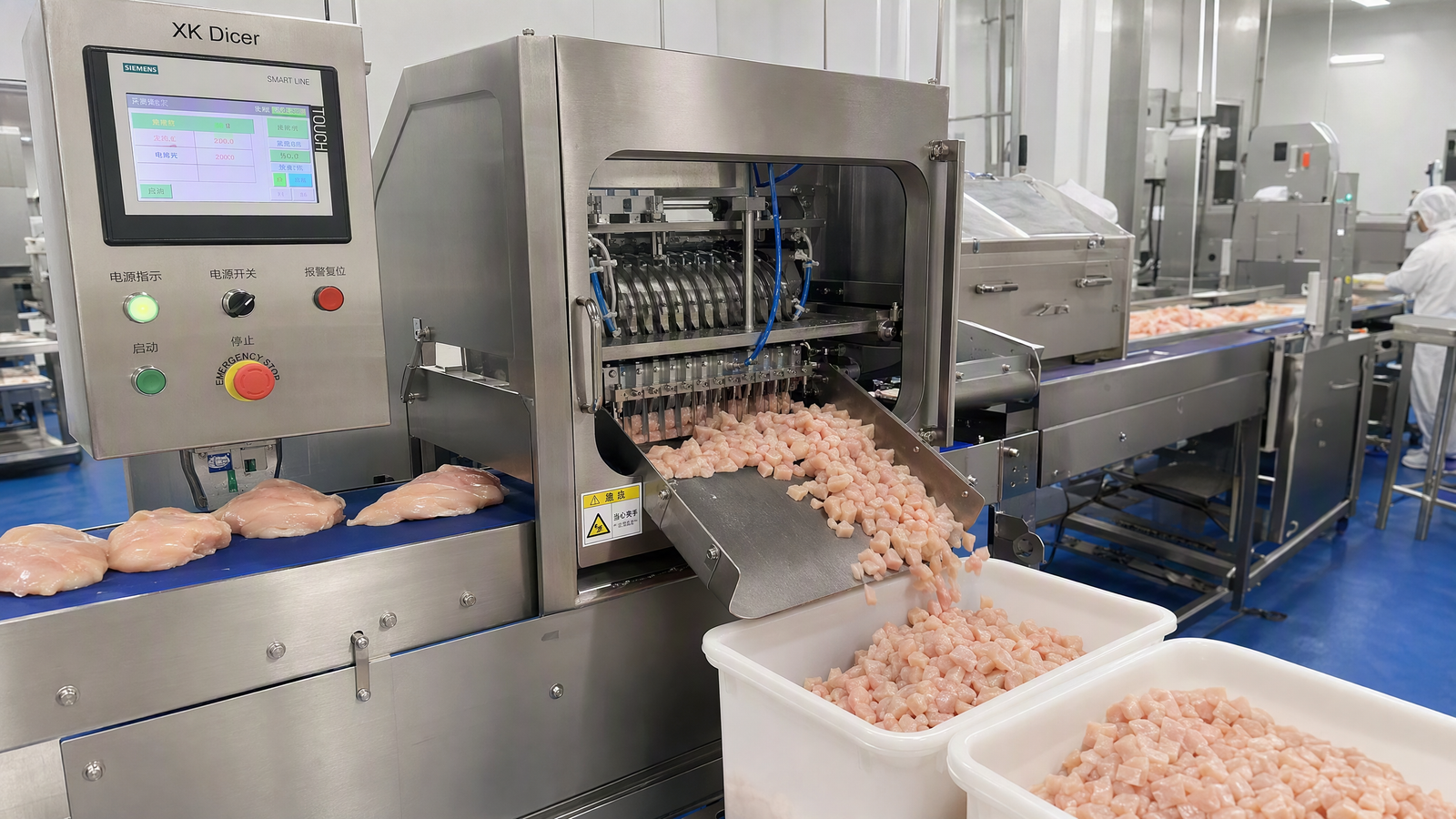
Whether you operate a small butcher shop or a multi-line industrial slaughterhouse, the equipment you choose for chicken dicing machine directly shapes your throughput, worker safety, and product yield. In this guide we walk through what to evaluate before purchasing, the specs that actually matter, and the operational practices that protect your investment over a 10+ year service life.
1. Define Your Throughput Requirement First
The single biggest mistake buyers make is selecting a machine by motor size alone. Start instead from your hourly target (kg or carcasses per hour) and work backward. A line running 200 beef carcasses per shift needs a different band-saw class than one running 30.
- Hourly throughput target (kg/h)
- Average carcass weight and product mix
- Peak shift vs. average shift ratio
- Available floor space and ceiling height
2. Match the Cutting Tool to the Product
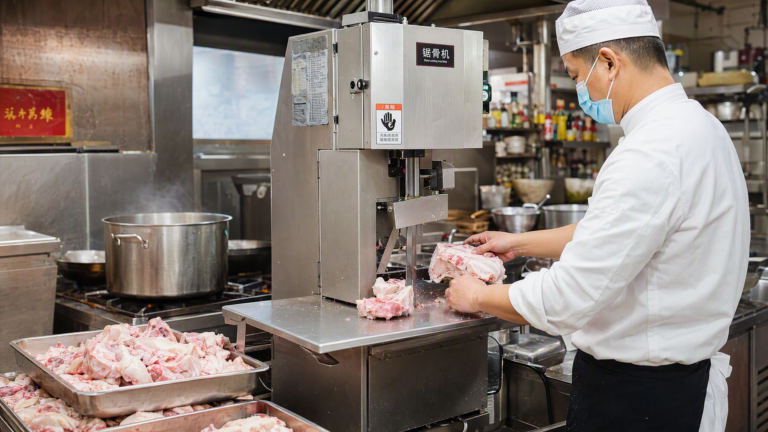
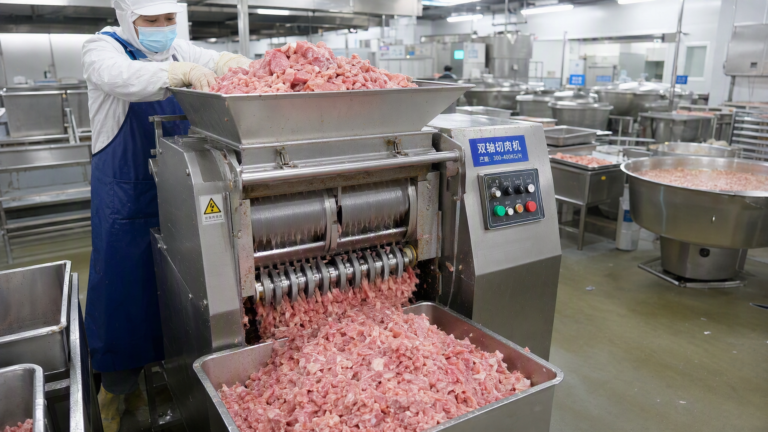
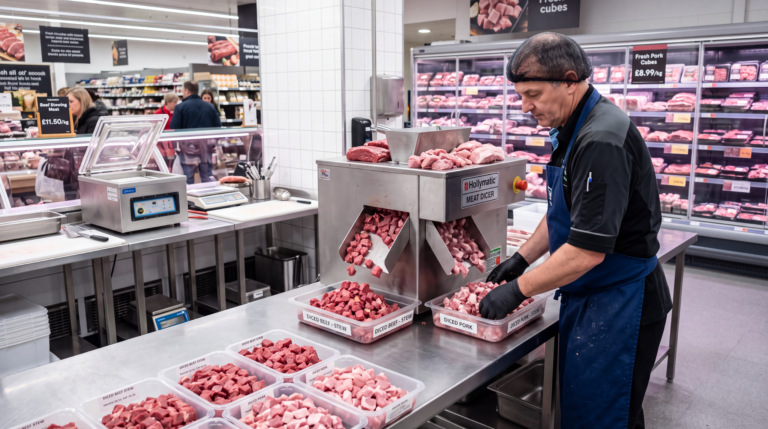
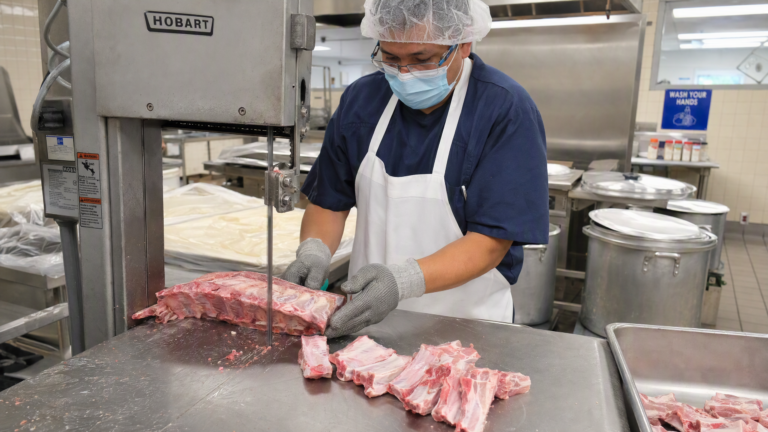
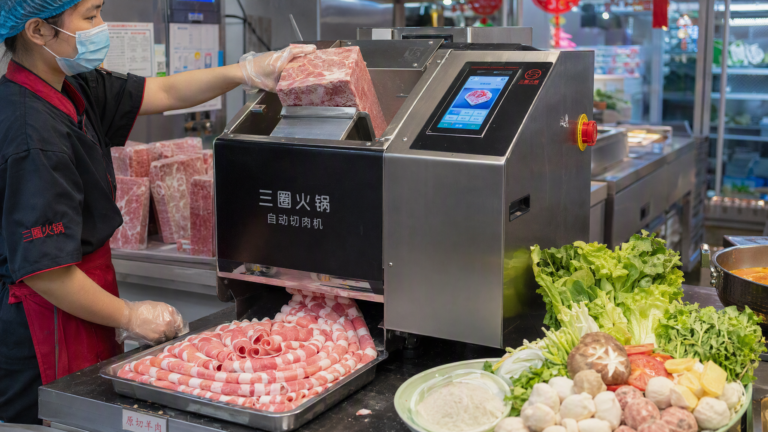
Bone saws, slicers, dicers, and strip cutters each address a different output. Selecting the wrong tool family is the fastest path to under-utilized capital. Yuerui’s meat processing line covers eight product categories so producers can spec a matched set rather than mix-and-match from multiple vendors.
3. Food-Grade Construction Is Non-Negotiable
All contact surfaces should be SUS 304 stainless steel, with frame, motor housing, and operator guards in SUS 304 or food-grade coated carbon steel. Look for IP65 control panels, sanitary welded seams (no threaded fasteners in contact zones), and EHEDG or NSF-compliant design where local code requires.
4. Evaluate Safety and Operator Ergonomics
Two-hand controls, emergency stop circuits, interlocked guards, and CE / OSHA compliance reduce injury risk and insurance cost. For repetitive cuts, height-adjustable infeed tables and powered discharge conveyors cut operator strain dramatically.
5. Plan for Sanitation and Maintenance
Daily wash-down is the rule on any commercial meat line. Specify quick-release blades, tool-free guards, and CIP (clean-in-place) capability where budget allows. Spare-parts inventory and remote diagnostics cut downtime on a 24/7 line.
6. Total Cost of Ownership Over 5 Years
A cheaper machine with a 2-year service life often costs more than a quality machine amortized over 10 years. Factor in:
- Initial purchase price
- Energy consumption (kWh per kg processed)
- Blade and wear-part replacement cost
- Service contract and spare-parts lead time
- Operator training and turnover
7. Vendor Support and Spare Parts
Ask for documented response times, on-site commissioning, and operator training included in the purchase price. Manufacturers with regional service hubs shorten the mean time to repair when a line goes down.
Conclusion
Choosing equipment for chicken dicing machine is a multi-year commitment. Define your throughput, food-safety, and operator requirements first, then select the machine class that meets them. Browse Yuerui’s complete meat processing equipment range or contact our engineers for a tailored recommendation.