Professional Food Processing Machinery Manufacturer

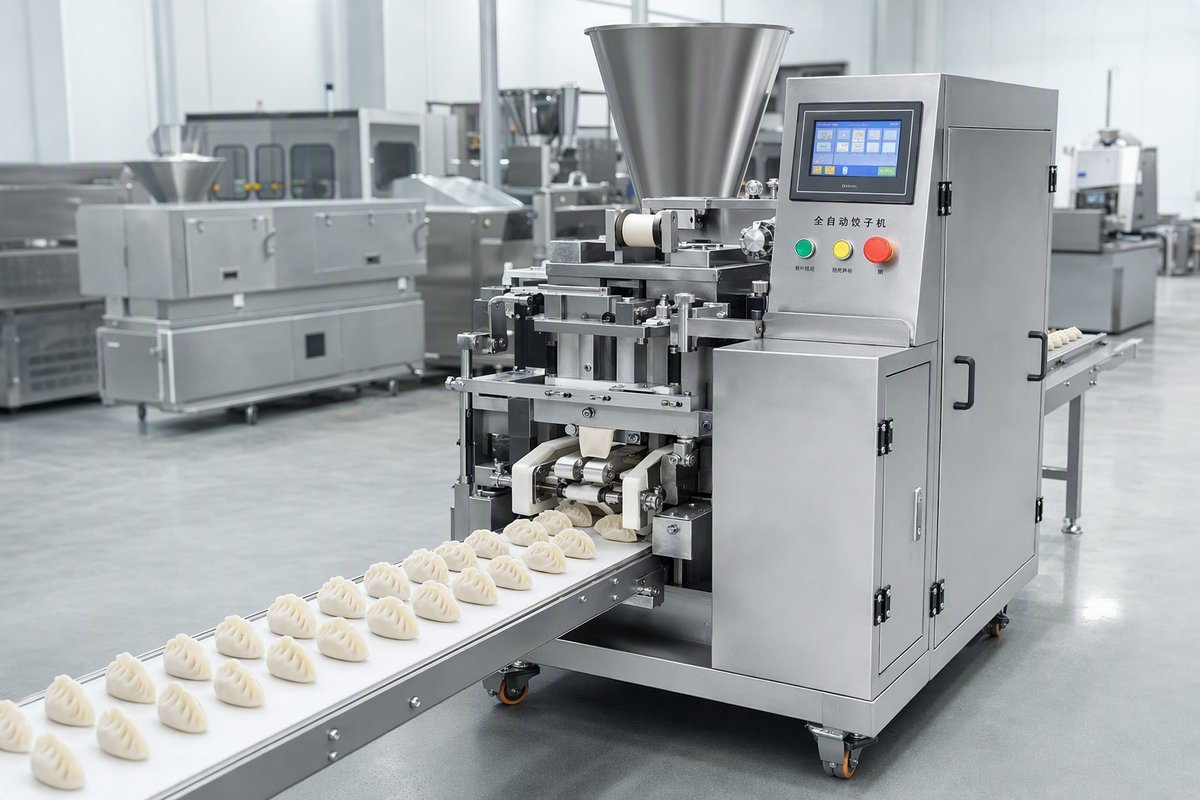

Automatic Dumpling Making Machine: How It Transforms Frozen Food Production — learn how Yuerui Machinery supports your production with reliable equipment and engineering.
An automatic dumpling making machine has become an indispensable asset for frozen food manufacturers seeking to scale production while maintaining consistent quality. As the global demand for frozen dumplings continues to rise, factories are increasingly turning to automated equipment to replace labor-intensive manual processes. This guide explores how these machines work, their production capabilities, the variety of dumplings they can produce, and the key advantages they offer to frozen food operations.
How an Automatic Dumpling Making Machine Works
The core principle behind an automatic dumpling making machine is the seamless integration of dough preparation, filling deposition, and forming/sealing mechanisms. The process can be broken down into three primary stages:
1. Dough Sheet Formation
The machine begins by pressing and rolling flour dough into a continuous, uniform sheet. The thickness of this sheet is adjustable, allowing manufacturers to produce dumplings with different wrapper thicknesses. Advanced models use dual-roller systems that progressively thin the dough, ensuring a smooth, elastic wrapper that resists tearing during cooking.
2. Filling Deposition
A precision filling system deposits a measured amount of filling onto the dough sheet at regular intervals. The filling hopper is typically equipped with an auger or pump mechanism that ensures consistent portioning. This is critical for product uniformity and for meeting nutritional labeling requirements in export markets.
3. Forming and Sealing
The forming mold then presses and crimps the dough around the filling, creating the characteristic dumpling shape. The sealing pressure and pattern can be adjusted to produce different dumpling styles. Modern machines achieve sealing rates that minimize leakage during freezing and cooking, which is one of the most common quality complaints in frozen dumpling products.
For manufacturers looking to diversify their product line, Yuerui Machinery’s handmade-style dumpling machine produces dumplings with a hand-crimped appearance that commands premium pricing in retail markets.
Production Capacity and Throughput
One of the most critical considerations for frozen food factories is production capacity. Automatic dumpling machines are rated by the number of dumplings they can produce per minute or per hour. The table below illustrates typical capacity ranges across different machine tiers:
| Machine Tier | Output (pcs/min) | Daily Output (8 hrs) | Recommended Factory Size |
|---|---|---|---|
| Entry-level | 60–100 | 28,800–48,000 | Small workshop / startup |
| Mid-range | 100–180 | 48,000–86,400 | Mid-size frozen food plant |
| Industrial-grade | 180–300+ | 86,400–144,000+ | Large-scale production facility |
It is important to note that actual throughput depends on factors such as dough consistency, filling viscosity, and operator proficiency. Factory managers should also consider the machine’s footprint relative to available floor space, as well as the need for upstream equipment such as dough mixers and downstream equipment such as quick-freezing tunnels.
Types of Dumplings an Automatic Machine Can Produce
Modern automatic dumpling machines are remarkably versatile. By changing the forming mold and adjusting parameters, a single machine can produce a wide variety of dumpling shapes and sizes. Common products include:
- Traditional Chinese jiaozi – the classic crescent-shaped boiled or pan-fried dumpling
- Japanese gyoza – thinner wrapper variant with a flat bottom for pan-frying
- Mandu (Korean) – round or crescent shapes suitable for steaming, boiling, or frying
- Wontons – smaller, thinner-wrapper products for soups
- Mini dumplings – bite-sized products popular in ready-meal packaging
Beyond dumplings, many manufacturers use their equipment to produce related stuffed products. The handmade-style steamed bun machine from Yuerui Machinery, for example, allows factories to expand into the frozen steamed bun (baozi) market with minimal additional investment.
Benefits of Automatic Dumpling Machines for Frozen Food Factories
Consistent Product Quality
Manual dumpling making inevitably leads to variations in size, shape, filling weight, and seal quality. An automatic dumpling making machine eliminates these inconsistencies, producing uniformly shaped products that meet retail and export standards. Consistency is especially critical for frozen products, where uniform size ensures even freezing and cooking.
Significant Labor Cost Reduction
A single automatic machine can replace 10 to 20 skilled workers, depending on the model and production volume. This reduction in labor dependency is particularly valuable in regions facing rising wages and labor shortages. The savings can typically recoup the machine investment within 12 to 24 months.
Improved Food Safety and Hygiene
Automated production minimizes human contact with the product, significantly reducing the risk of contamination. Stainless steel construction and enclosed processing areas make the machines easy to clean and compliant with HACCP, FDA, and CE food safety standards.
Higher Production Efficiency
Automatic machines can operate continuously for extended periods, maintaining consistent output without breaks. When integrated with automatic dough mixers, filling preparation equipment, and IQF (Individual Quick Freezing) tunnels, the entire production line achieves maximum throughput with minimal downtime.
Automatic vs. Manual Dumpling Production: A Comparison
| Factor | Manual Production | Automatic Machine |
|---|---|---|
| Output per worker | ~300–500 pcs/hr | 6,000–18,000 pcs/hr |
| Product consistency | Low (varies by worker) | High (machine-controlled) |
| Hygiene risk | High (extensive handling) | Low (minimal contact) |
| Labor dependency | Very high | Low (1–2 operators) |
| Per-unit cost | High at scale | Decreases with volume |
| Scalability | Limited by workforce | Easily scalable |
The comparison clearly demonstrates that for any frozen food operation producing more than a few thousand dumplings per day, the transition to an automatic dumpling making machine is not merely an option but a competitive necessity.
Key Considerations When Integrating an Automatic Dumpling Machine
Dough Recipe Optimization
Machine performance is closely tied to dough formulation. The dough must have sufficient gluten development and moisture content to form a pliable sheet that does not crack during forming. Factory technicians should work closely with the equipment supplier to fine-tune water absorption, resting time, and flour protein content for optimal machine performance.
Filling Preparation
Fillings must be properly ground, mixed, and seasoned to flow consistently through the depositor. Overly wet fillings can cause leakage, while overly dry fillings may not deposit evenly. The ideal filling has a paste-like consistency that holds its shape without being too dense for the pump system.
Integration with Freezing Line
For frozen food factories, the dumpling machine must be synchronized with the downstream IQF tunnel. Dumplings should enter the freezer promptly after forming to prevent sticking and wrapper deterioration. Conveyor height and belt speed must be matched between the former and the freezer entrance.
Maintenance Tips for Automatic Dumpling Machines
Proper maintenance is essential to ensure longevity, food safety compliance, and consistent product quality. The following practices are recommended:
- Daily cleaning: Disassemble and clean all contact parts—dough hopper, filling tube, forming molds, and conveyor belts—using food-grade sanitizers after each production run.
- Lubrication schedule: Follow the manufacturer’s lubrication schedule for bearings, gears, and moving parts. Use only food-grade lubricants.
- Mold inspection: Regularly inspect forming molds for wear and damage. Worn molds produce poorly sealed dumplings and should be replaced promptly.
- Belt tension check: Check conveyor belt tension and alignment weekly to prevent tracking issues that can cause product loss.
- Sensor calibration: Calibrate filling portioning sensors monthly to maintain accurate weight control and minimize product giveaway.
- Spare parts inventory: Keep critical spare parts on hand—especially forming molds, O-rings, and belts—to minimize downtime in the event of component failure.
Establishing a preventive maintenance log and training operators on routine checks can extend the machine’s service life by several years and prevent costly unplanned shutdowns during peak production seasons.
Troubleshooting Common Production Issues
Even with a well-maintained automatic dumpling making machine, operators may encounter production issues from time to time. Understanding the root causes of common problems enables quick resolution and minimizes downtime. The following troubleshooting guide covers the most frequently reported issues:
Dumpling Wrapper Tearing or Cracking
Wrapper tearing is typically caused by dough that is too dry or too thin. To resolve this issue, increase the dough moisture content by 1–2% and verify that the sheeting rollers are set to the correct thickness. If the problem persists, check the flour protein content—low-protein flour produces weak dough that tears easily. A minimum of 11% protein is recommended for machine-made dumpling wrappers.
Filling Leakage During Forming
Filling leakage occurs when the filling is too wet, the portion is too large, or the sealing mold is worn. First, check the filling consistency and adjust the moisture content by reducing liquid ingredients or adding a binding agent such as starch. Next, verify that the filling portioning system is set to the correct volume. Finally, inspect the forming mold for wear—worn molds produce incomplete seals that allow filling to escape during freezing and cooking.
Inconsistent Dumpling Weight
Weight inconsistency is usually traced to the filling deposition system. Check the filling hopper for air pockets that can cause uneven portioning. Ensure the filling is well-mixed and free of large chunks that could block the depositor nozzle. Calibrate the filling sensor regularly, and verify that the dough sheet thickness remains consistent throughout the production run.
Dumplings Sticking to the Conveyor
Sticking occurs when the conveyor belt is not adequately floured or when the dough is too moist. Apply a light dusting of flour or starch to the belt before starting production. If the problem persists, slightly reduce the dough moisture content or increase the belt speed to reduce contact time between the dumplings and the belt surface.
| Issue | Likely Cause | Quick Fix |
|---|---|---|
| Wrapper tearing | Dry dough or thin sheet | Increase moisture 1–2%; check flour protein |
| Filling leakage | Wet filling or worn mold | Reduce filling moisture; inspect and replace mold |
| Weight variation | Air pockets in hopper | Mix filling thoroughly; calibrate sensor |
| Sticking to belt | Insufficient dusting | Apply flour dusting; increase belt speed |
Documenting each issue and its resolution in a production log builds an institutional knowledge base that speeds up future troubleshooting and helps train new operators more effectively.
Choosing the Right Automatic Dumpling Making Machine
Selecting the right machine requires a thorough assessment of your production goals, facility constraints, and product requirements. Key factors to evaluate include:
- Target output volume – Match the machine capacity to your daily production target with a 20–30% buffer for future growth.
- Dumpling variety – Confirm the machine supports all the shapes and sizes you plan to produce, and check the cost and availability of additional molds.
- Material quality – Ensure the machine is constructed from food-grade 304 or 316 stainless steel for durability and compliance.
- Motor and drive system – Look for machines with reliable, serviceable motors and readily available replacement parts.
- After-sales support – Choose a supplier that offers installation, training, and responsive technical support, especially if you are new to automated production.
Yuerui Machinery specializes in food processing equipment for the dumpling and steamed bun industry. Their dumpling making machine is designed for factories that demand high output with a handcrafted product appearance. To discuss your specific production requirements, contact the Yuerui Machinery team for a consultation.
Conclusion
Investing in an automatic dumpling making machine is a strategic decision that transforms frozen food production from a labor-dependent operation into an efficient, scalable, and quality-controlled manufacturing process. With the ability to produce thousands of uniform dumplings per hour, reduce labor costs, improve food safety, and adapt to multiple product formats, these machines deliver a clear return on investment for forward-thinking food manufacturers. By carefully selecting the right equipment, optimizing dough and filling formulations, and implementing a robust maintenance program, frozen food factories can position themselves for long-term growth in an increasingly competitive global market.