Professional Food Processing Machinery Manufacturer

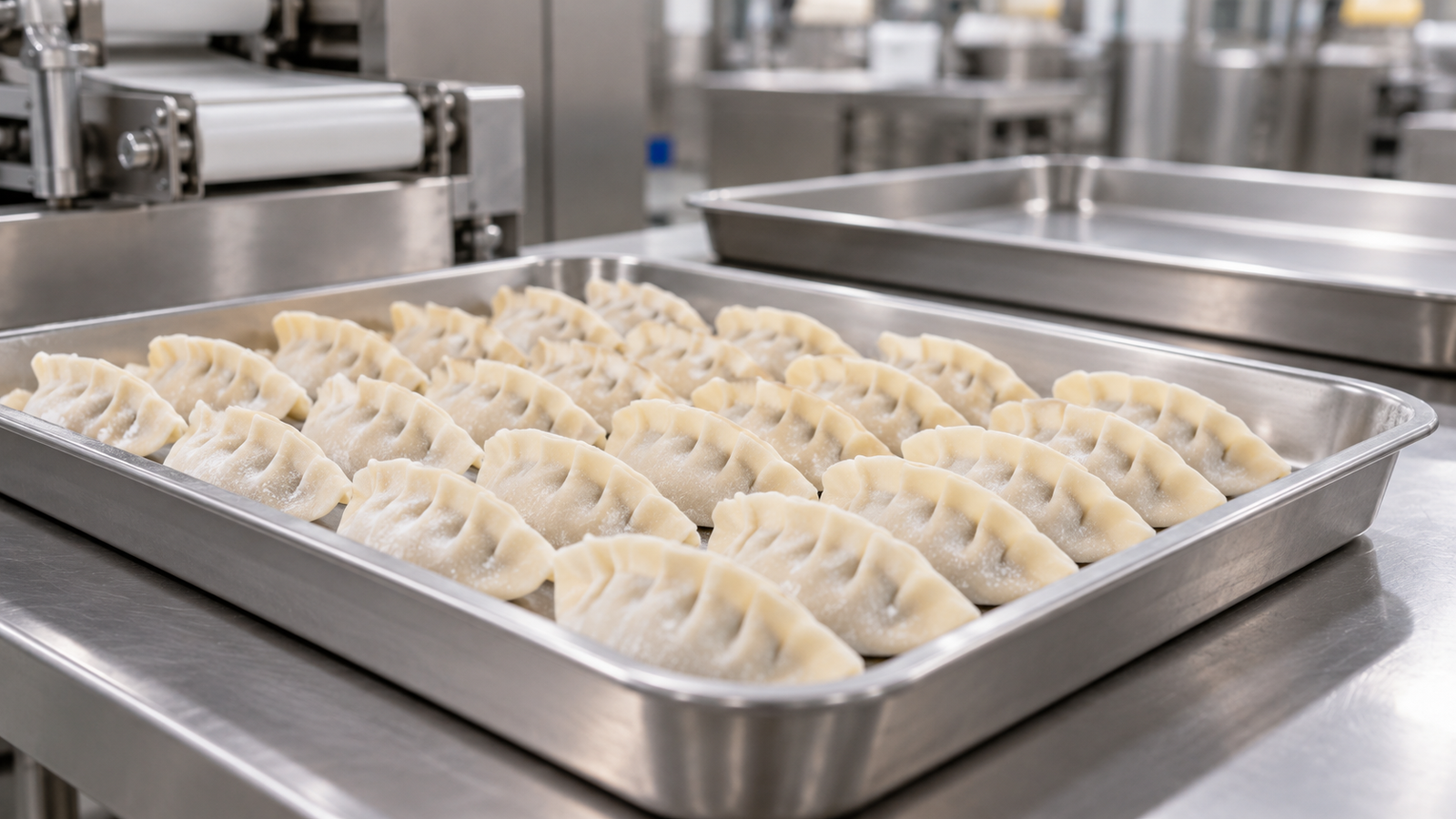

A frozen dumpling project needs a defined handoff between forming and the next processing stage. Buying a forming machine does not establish how dumplings reach trays, how full trays move, or which equipment performs freezing. Those gaps can remain hidden when an enquiry describes only a required number of pieces per hour. A useful solution starts with the condition and destination of the dumpling leaving the forming outlet.
Define the receiving unit
Specify the tray or receiving container before drawing the line. Record its usable surface, handling method and intended position at the outlet. Provide a photograph or drawing of the proposed loading arrangement. Ask the equipment supplier to confirm whether formed pieces are collected manually or through a separately quoted transfer arrangement. Do not assume that a conveyor, tray loader or freezing system is included.
Yuerui's dumpling-machine product information describes wrapper feeding, filling, forming and discharge. It lists frozen-food manufacturing among the application settings. This supports discussing the forming stage, but it does not verify the complete frozen-product process. Treat chilling, freezing, storage and packing as separate equipment and process responsibilities.
Evaluate the transfer with the actual product
Prepare representative dough and filling rather than selecting a machine from appearance alone. During an agreed evaluation, observe the condition of pieces at discharge, after placement and after the handling steps relevant to your process. Record the recipe, product weight, tooling and elapsed handling time with the observations. A photograph without those details cannot explain whether the handoff will suit another recipe.
Distinguish a defect noticed at forming from damage introduced during transfer. This makes discussion more useful than assigning every broken piece to the forming machine. The evaluation should identify where handling changes are needed, without reporting an improvement percentage before evidence exists.
Assign responsibility for each gap
A scope drawing should identify who supplies the forming machine, receiving trays, transfer equipment and downstream freezing equipment. Mark each manual step explicitly. Ask which interfaces will be demonstrated together and which will only be described in documents. Keep any equipment outside the quotation clearly labelled.
The first purchasing deliverable is a handoff agreement: incoming materials, formed-piece requirements, receiving arrangement and the checks still required. Once these are understood, the supplier can discuss a forming configuration without confusing machine output with a completed frozen-food line. Send Yuerui the tray details and sample description together, so that the equipment conversation begins at the actual transfer point.
Use a tray interface worksheet
The tray worksheet should separate the tray's external size from its usable receiving area. Ask the purchaser to identify any edge, frame or cover that affects placement. Record how a tray is supported and removed, and whether the proposed arrangement changes when another product is made. These details belong in the interface drawing even if trays are purchased from a different supplier. The equipment proposal can then identify what is confirmed and what needs a physical fit check.
Describe the unit that moves after forming: an individual piece, a loaded tray, a rack or another receiving arrangement. This helps distinguish the forming outlet from the workshop's material movement. If a rack is part of the customer's existing process, provide its relevant drawing and identify the person who confirms compatibility. Do not assume that a tray fitting the outlet will automatically fit every downstream rack or machine.
Decide what happens when receiving pauses
A project review should discuss a receiving interruption before selecting an automatic handoff. Ask what the operator is expected to observe and which actions are covered by the supplied instructions. The proposal should identify the boundary between the machine controls and an external transfer system. This is a request for documented behavior, not a recommendation to override controls or continue production without a receiving arrangement.
Where manual tray exchange is proposed, include it in the observation plan. Record how the product is collected during the agreed evaluation and which parts of that arrangement will be used at the actual site. A demonstration with a temporary receiving surface does not confirm the customer's tray system. Any subsequent adjustment should be identified as a separate configuration or layout change.
Close the handoff review
The review can end with three distinct decisions: the forming configuration is suitable for further evaluation, the receiving arrangement requires revision, or the full interface remains unconfirmed. Keep the evidence for each decision attached to the same sample identifier. This prevents a satisfactory formed dumpling from being mistaken for acceptance of an untested transfer system.
Before ordering, ask the supplier and purchaser to reconcile the equipment drawing, tray information and quoted scope. Record who supplies supporting items and who resolves remaining dimensions. The approved document should explain the intended handoff well enough that a later change of tray or receiving method triggers a focused review rather than an assumption that the earlier result still applies.