Professional Food Processing Machinery Manufacturer


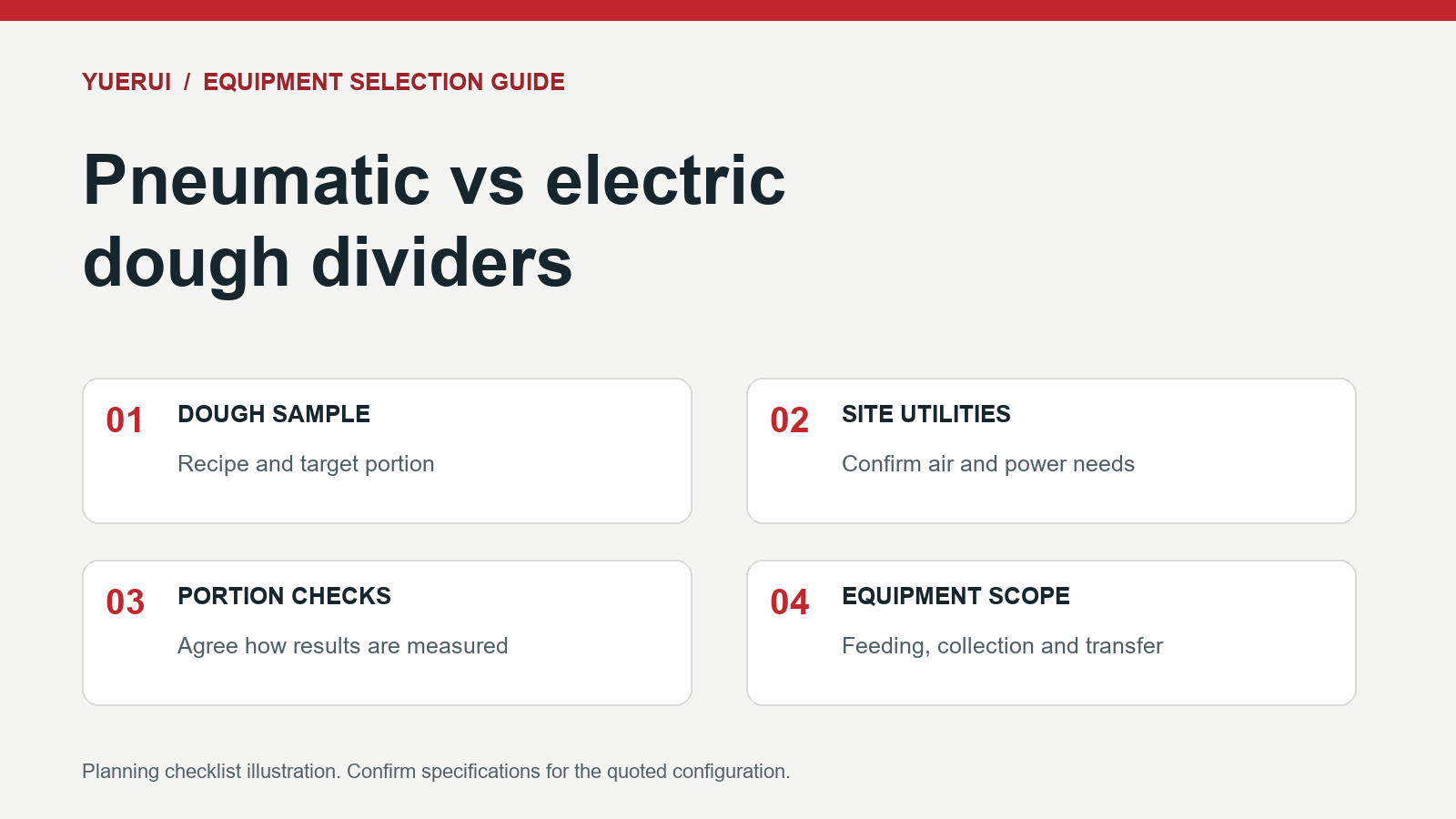
Choosing a pneumatic vs electric dough divider starts with the dough portion you need and the conditions at your production site. A model label alone does not define the complete installation or the result with your recipe. Before comparing quotations, prepare one written specification that every proposed configuration must answer. This guide explains what to include, what to ask the supplier, and how to keep unconfirmed information visible throughout the purchasing discussion.
Start with the portion, rather than the machine
Record the target weight of each dough piece, the intended finished food and the recipe used during normal production. Include photographs of a representative portion and explain how it is handled after dividing. A portion intended for a filled bun may enter a different next operation from one intended for a pressed pancake. Describe the actual process instead of assuming that similar-looking portions require the same configuration.
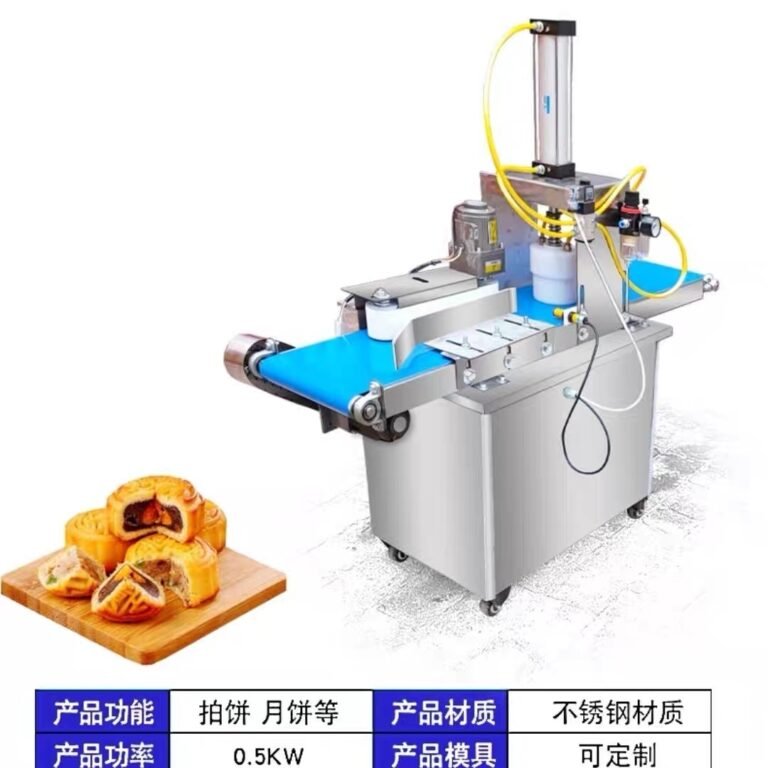
Yuerui’s supplied dough-divider introduction lists pneumatic and electric configurations and describes dough conveying and portion dividing. Those descriptions establish the configurations to discuss. They do not establish a verified weight tolerance, a suitable recipe range or a complete utility specification. Request a current model-specific confirmation before treating any of those details as purchase requirements.
Confirm the pneumatic configuration’s utility requirements
Ask whether the proposed pneumatic configuration needs an external compressed-air supply. If it does, request the required pressure, air consumption, connection details and any air-preparation requirements. Confirm who supplies the compressor and related equipment. Do not assume these are included in the machine quotation, or that a compressor already installed elsewhere in the workshop is suitable.
Separate the air-supply question from the electrical question. Ask for the electrical requirements of the complete proposed equipment package, including any separately supplied auxiliaries. Your enquiry should identify the country, available supply and the person responsible for checking the installation. Leave missing specifications blank until the supplier confirms them; a guessed value can turn into an avoidable purchasing error.
Define the electric configuration just as carefully
Request a written explanation of how the quoted electric model feeds dough, adjusts portion size and handles product changes. Confirm the utilities required for that exact configuration rather than inferring them from the word electric. Ask which accessories, receiving containers and supporting equipment are included and which must be provided locally. Keep these answers attached to the quoted model and revision.
The most useful comparison is between two complete equipment scopes. A lower machine price is difficult to interpret if one quotation includes supporting components and the other excludes them. Review the dough divider product information alongside the written scope, and ask for clarification wherever the descriptions differ.
Compare output on the same basis
State the number of acceptable portions needed during your scheduled production period. Record the target portion weight, the dough condition and the planned time available for operation. Keep setup, cleaning, replenishment and product changes visible. Ask whether a quoted output describes a short demonstration, sustained operation or accepted portions after checking. Those measures should not be treated as interchangeable.
Do not choose a machine solely by the highest brochure figure. Request the conditions associated with the quoted rate and ask how your sample would be evaluated. If no representative test has been completed, record output as an item requiring verification. This keeps an early selection discussion from becoming an unsupported promise about your production line.
Agree on a practical portion-checking record
Before a sample evaluation, agree on the recipe identification, target portion weight and the way samples will be collected and weighed. Record the machine configuration and settings with the observations. Keep measurements for individual portions so that variation remains visible. Agree with the supplier how results will be assessed; do not substitute an invented accuracy figure for an agreed acceptance criterion.
Include observations about feeding, transfer and the next processing step. If portions will go to a pancake forming machine, ask how they will be transferred and whether manual handling remains necessary. Listing two machines together does not establish that they connect automatically or have matched operating rates.
Prepare the installation and enquiry checklist
Provide the available floor or bench space, access route, receiving height and the locations of utilities. Ask for confirmed dimensions, clearance requirements and cleaning instructions for the quoted model. Request the applicable operating documentation and clarify who will explain setup and maintenance. Avoid assuming that a general product description covers every installation detail.
A useful comparison sheet has separate columns for pneumatic and electric configurations, with rows for portion range, sample conditions, utilities, equipment scope, receiving arrangements, cleaning access and unresolved questions. Mark each entry as supplier-confirmed, observed during evaluation or still outstanding. This makes the next decision clearer without pretending that missing evidence has already been supplied.
Send the completed sheet through the Yuerui configuration enquiry page. Include your dough sample description, target portion weight, production schedule, country and available site information. Request a model-specific response and an evaluation plan. The goal is a configuration that can be assessed against your actual process, supported by clear responsibilities and written specifications.