Professional Food Processing Machinery Manufacturer

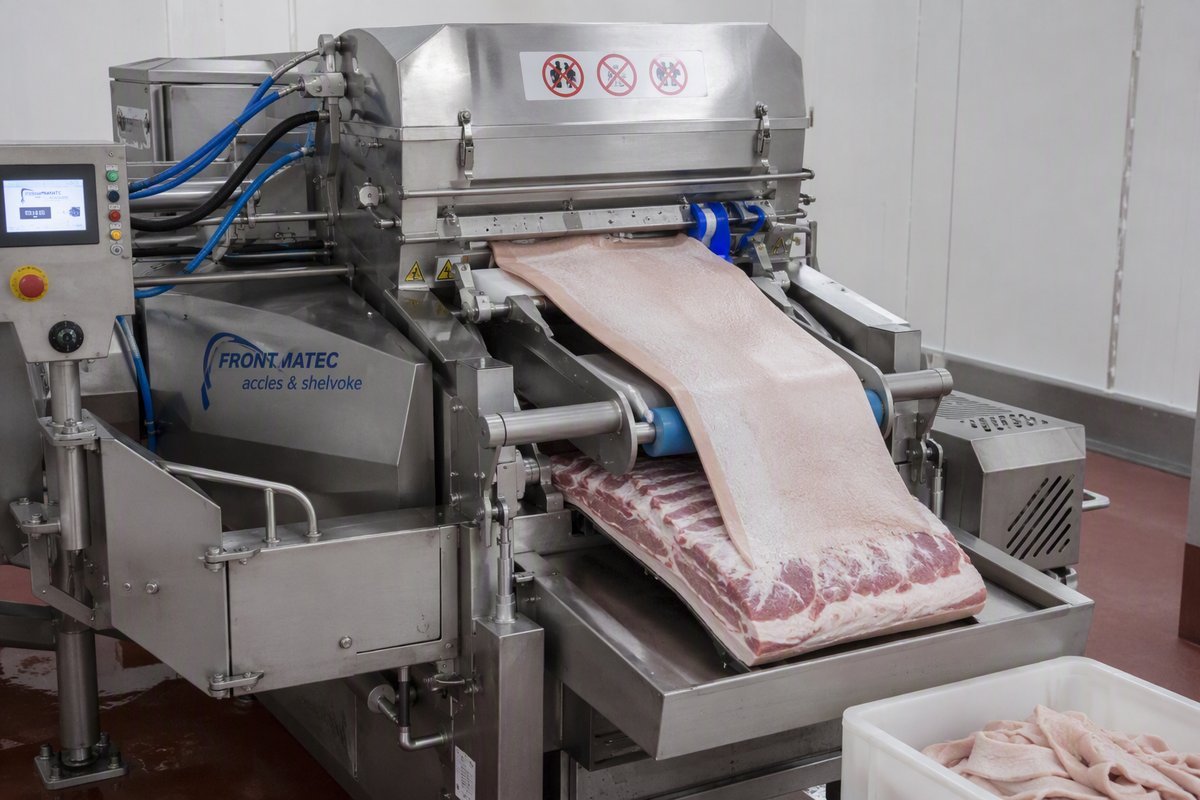

Pork Skinning Machine: How It Works and Why You Need One — learn how Yuerui Machinery supports your production with reliable equipment and engineering.
In modern meat processing, efficiency and yield are everything. A pork skinning machine is one of the most impactful investments a pork processing facility can make, transforming a labor-intensive, inconsistent manual process into a high-speed, precision operation. Whether you process pork belly for bacon, skinless cuts for retail, or prepare raw materials for further processing, understanding how a pork skinning machine works and what to look for when buying one is essential for maximizing profitability.
This guide covers everything from the working principles and types of pork skinning machines to key specifications, maintenance practices, and buying advice. By the end, you will have a clear picture of how this equipment fits into your production line and why it matters for your bottom line.
What Is a Pork Skinning Machine?
A pork skinning machine is a specialized piece of meat processing equipment designed to remove the skin (rind) from pork cuts—most commonly pork belly, shoulder, and ham—quickly and with minimal meat loss. The machine uses a combination of rollers, blades, and pressure systems to separate the skin from the underlying fat and muscle tissue cleanly, leaving a smooth surface that is ready for further processing or packaging.
In traditional pork processing, skinning is done by hand with a knife. This method is slow, requires skilled labor, and results in significant variation in the amount of meat left on the skin (which directly reduces yield). A pork skinning machine addresses all of these problems. It can process hundreds of pork bellies per hour with consistent, repeatable results, and the amount of residual meat left on the skin is typically less than 2 millimeters—far better than even the most skilled human skinner can achieve consistently.
For B2B buyers—whether you run a medium-sized processing plant, a central kitchen supplying restaurant chains, or a large industrial slaughterhouse—a pork skinning machine is not just a convenience. It is a yield-improving, labor-reducing, quality-standardizing piece of equipment that pays for itself through improved product recovery and reduced labor costs.
How a Pork Skinning Machine Works
The working principle of a pork skinning machine is deceptively simple, but the engineering behind consistent, high-yield performance is sophisticated. Here is a step-by-step breakdown of the process:
Step 1: Loading and Positioning
The operator places the pork cut—typically belly or shoulder—skin-side down onto the machine’s feed conveyor or loading table. Some machines include automatic centering mechanisms that align the product for optimal skinning. Proper positioning is critical because misalignment leads to uneven skin removal and increased meat loss.
Step 2: Toothed Roller Engagement
The machine’s toothed feed roller grips the skin side of the pork. The teeth are designed to grip firmly without tearing the skin, pulling it forward at a controlled speed. The grip mechanism is adjustable to accommodate different skin thicknesses and fat layers, which vary by breed, diet, and cut.
Step 3: Blade Separation
As the toothed roller pulls the skin forward, a stationary or oscillating blade passes through the interface between the skin and the fat layer. The blade angle, sharpness, and pressure are precisely calibrated to cut along this natural separation plane. Advanced machines use spring-loaded blade assemblies that automatically adjust to variations in fat thickness, ensuring a consistent cut depth across the entire surface of the product.
Step 4: Skin and Meat Separation
The separated skin is discharged through a separate chute or conveyor, while the skinned meat continues along the main conveyor for further processing. The two streams never cross, which simplifies cleanup and prevents cross-contamination. In some models, the skin can be collected directly into a bin for rendering or further use (such as pork rind production).
Step 5: Discharge and Inspection
The skinned pork exits the machine and is inspected—either manually or via automated vision systems—for any remaining skin patches. If touch-ups are needed, they are minimal. The throughput of this process ranges from 200 to 1,200 pork bellies per hour depending on the machine model and operator proficiency.
Types of Pork Skinning Machines
Pork skinning machines come in several configurations, each suited to different production scales and product types. Understanding these types will help you select the right machine for your facility.
1. Tabletop Manual-Feed Skinning Machines
These compact machines are designed for small-scale processors, butcher shops, and central kitchens processing limited volumes. The operator manually feeds each piece of pork into the machine. While throughput is lower (typically 100-300 pieces per hour), these machines are affordable, easy to clean, and require minimal floor space. They are ideal for businesses that are transitioning from manual skinning to mechanized processing.
2. Conveyor-Fed Semi-Automatic Skinning Machines
These machines feature a conveyor belt that feeds pork cuts into the skinning mechanism. The operator loads product onto the conveyor, and the machine handles the rest. Throughput ranges from 300 to 600 pieces per hour. Semi-automatic machines are the sweet spot for medium-sized processing plants that need consistent results without the investment required for fully automatic systems.
3. Fully Automatic Inline Skinning Systems
Designed for large industrial slaughterhouses and high-volume processing plants, fully automatic systems integrate with overhead conveyors and automated product handling. They can process 600 to 1,200+ bellies per hour with minimal operator intervention. These systems often include automatic blade sharpening, self-cleaning cycles, and integrated quality control sensors. The investment is significant, but the return in labor savings and yield improvement is substantial for high-volume operations.
4. Multi-Function Skinning and Membrane Removal Machines
Some machines are designed to handle multiple tasks—skinning, membrane removal, and fat trimming—in a single pass. These versatile units are valuable for processors who handle a variety of pork cuts and want to maximize equipment utilization. However, multi-function machines may sacrifice some specialized performance compared to dedicated skinning machines.
Key Specifications to Consider
When evaluating a pork skinning machine for your facility, the following specifications should be at the top of your checklist:
- Throughput capacity: Measured in pieces per hour or kilograms per hour. Match this to your daily production volume with at least 20% headroom for future growth.
- Residual meat on skin: The best machines leave less than 2mm of meat on the skin. This is the single most important yield metric—every millimeter of meat left on the skin is lost revenue.
- Blade type and adjustability: Look for machines with quick-change blade systems and adjustable blade angles. Fixed-angle blades limit your flexibility across different product types.
- Motor power: Typically ranges from 0.75kW for tabletop models to 3kW+ for industrial systems. More power means faster processing but also higher energy costs.
- Construction material: Food-grade 304 stainless steel is the industry standard. Avoid machines with painted surfaces or non-stainless components in contact zones.
- Conveyor width: Must accommodate your largest product. Standard widths range from 400mm to 800mm. Pork bellies, in particular, can be wide, so measure your typical product dimensions before buying.
- Blade speed: Adjustable blade speed allows you to optimize for different products. Faster is not always better—some products skin more cleanly at lower speeds.
- Cleaning and sanitation features: Look for tool-free disassembly, rounded edges, and IP65 washdown ratings. Daily cleaning is mandatory in meat processing, and a machine that is difficult to clean will cost you time and create food safety risks.
- Safety features: Emergency stop buttons, blade guards, interlock switches that prevent operation when covers are open, and non-slip feet are all essential.
Pork Skinning Machine Comparison Table
The following table compares the three main types of pork skinning machines to help you quickly identify which category fits your needs:
| Feature | Tabletop Manual-Feed | Conveyor-Fed Semi-Auto | Fully Automatic Inline |
| Throughput (pieces/hr) | 100-300 | 300-600 | 600-1,200+ |
| Motor Power | 0.75-1.1 kW | 1.5-2.2 kW | 2.2-4.0 kW |
| Residual Meat on Skin | 2-4 mm | 1-3 mm | <2 mm |
| Conveyor Width | 400-500 mm | 500-650 mm | 650-800 mm |
| Operators Required | 1 | 1-2 | 1 (monitoring) |
| Blade Type | Fixed blade | Spring-loaded blade | Auto-adjusting blade |
| Footprint (approx.) | 0.5-1.0 m² | 2-4 m² | 5-10 m² |
| Ideal For | Small butchers, central kitchens | Medium processing plants | Industrial slaughterhouses |
| Price Range (USD) | $2,000-$6,000 | $6,000-$15,000 | $15,000-$50,000+ |
Applications and Use Cases
A pork skinning machine is used across a wide range of pork processing operations. Here are the most common applications:
Bacon Production
The largest single application for pork skinning machines is bacon production. Pork belly must be skinned before curing, smoking, and slicing. The quality of the skinning operation directly affects the appearance and yield of the final bacon slices. Uneven skinning leads to inconsistent slice thickness and rejected product, which is why bacon processors demand the tightest residual meat specifications.
Skinless Pork Cuts for Retail
Many retail markets prefer skinless pork cuts—loin, shoulder, and leg—because they are easier for consumers to prepare and cook. A pork skinning machine produces the clean, smooth surface that retail packaging demands. Processors supplying supermarket chains often use semi-automatic or fully automatic machines to meet volume requirements.
Sausage and Processed Meat Production
When producing sausages, pates, and other comminuted meat products, skinless pork trimmings are a primary raw material. Skinning the pork before trimming ensures that no skin fragments end up in the final product, which would compromise texture and appearance. The efficiency of the skinning step directly affects the cost of raw material for sausage production.
Pork Rind and Crackling Production
The skin removed by a pork skinning machine is not waste—it is a valuable raw material for pork rinds, cracklings, and gelatin production. Clean, consistently separated skin is easier to process further and commands a higher price from downstream buyers. Some processors specifically invest in skinning machines to produce high-quality pork rind for snack food manufacturers.
Central Kitchens and Food Service
Central kitchens that supply restaurant chains, institutional cafeterias, and catering operations often need to process large volumes of pork into portion-controlled cuts. A pork skinning machine integrated into the production line ensures that every piece meets the same specification, which is critical for maintaining consistent menu quality across multiple locations.
How a Pork Skinning Machine Improves Your Bottom Line
Investing in a pork skinning machine delivers measurable returns in three key areas:
1. Yield Improvement
The most direct financial benefit is improved yield. Manual skinning typically leaves 4-8mm of meat on the skin. A good pork skinning machine reduces this to under 2mm. On a pork belly weighing 8kg, recovering an additional 3mm of meat across the entire surface can mean recovering 150-250 grams of saleable product per belly. At a processing volume of 500 bellies per day, that is 75-125kg of additional product per day—product that would otherwise be sold as low-value skin or rendering material.
2. Labor Cost Reduction
Manual skinning requires skilled workers, and skilled labor is increasingly expensive and difficult to find. A single operator running a semi-automatic pork skinning machine can replace 3-5 manual skinners. The labor savings alone often justify the machine purchase within 12-18 months, even before accounting for yield improvements.
3. Product Consistency and Quality
Consistent skinning produces consistent products. This matters for everything from bacon slice uniformity to retail package appearance. Consistent products command higher prices, have lower rejection rates, and build customer trust. For B2B buyers supplying retail chains, consistency is not a nice-to-have—it is a contractual requirement.
Maintenance Tips for Pork Skinning Machines
A pork skinning machine is a precision instrument with moving parts and sharp blades operating in a wet, demanding environment. Proper maintenance is essential for safety, performance, and longevity. Follow these guidelines:
Daily Maintenance
- Clean thoroughly after each shift: Disassemble all removable parts and wash with hot water and food-grade detergent. Pay special attention to the blade assembly, toothed rollers, and conveyor surfaces.
- Inspect the blade: Check for nicks, dullness, or damage. A dull blade tears the skin instead of cutting it cleanly, which increases meat loss and creates an uneven surface. Sharpen or replace as needed.
- Check the toothed roller: Inspect for worn or broken teeth. Damaged teeth reduce grip and cause slippage, leading to uneven skinning.
- Lubricate moving parts: Apply food-grade lubricant to bearings, guide rails, and pivot points according to the manufacturer’s schedule.
- Verify safety interlocks: Test all emergency stops and safety switches before starting production each day.
Weekly Maintenance
- Deep clean the machine frame: Remove guards and panels to access hard-to-reach areas where product residue can accumulate.
- Check belt tension and alignment: Loose or misaligned conveyor belts cause product tracking issues and uneven skinning.
- Inspect electrical components: Check for moisture ingress, loose connections, or signs of wear in the control panel.
Monthly and Quarterly Maintenance
- Replace blades on schedule: Even with regular sharpening, blades eventually lose their temper and must be replaced. Follow the manufacturer’s recommended replacement interval, typically every 3-6 months depending on usage.
- Check motor performance: Monitor amperage draw and listen for unusual noises. Increasing amperage or new sounds can indicate bearing wear or other mechanical issues.
- Calibrate blade pressure: Over time, spring tension can drift. Recalibrate to ensure the blade maintains the correct cutting depth.
- Review maintenance logs: Track recurring issues and address root causes before they lead to unplanned downtime.
Buying Guide: How to Choose the Right Pork Skinning Machine
Selecting the right pork skinning machine requires a clear understanding of your current and projected production needs. Here is a step-by-step buying framework:
1. Assess Your Production Volume
Calculate your daily and weekly pork processing volume in pieces and kilograms. Include projected growth for the next 2-3 years. Choose a machine whose throughput capacity exceeds your current volume by at least 20% to ensure you have room to grow without needing to upgrade prematurely.
2. Identify Your Product Mix
Do you skin only pork belly, or do you also process shoulder, ham, and loin? Different cuts have different skin thicknesses, fat layer depths, and shapes. If you process multiple cuts, look for a machine with adjustable settings and a versatile blade system. If you specialize in one product, a dedicated machine optimized for that product will deliver better performance.
3. Evaluate Your Facility Constraints
Measure your available floor space, ceiling height, and utility connections (power, water, drainage). Consider the workflow—where will the machine sit in relation to receiving, primary processing, and packaging? A well-placed pork skinning machine minimizes product handling and improves overall line efficiency.
4. Compare Residual Meat Specifications
This is the most important performance metric. Ask manufacturers for documented residual meat measurements, not just marketing claims. If possible, request a demonstration with your actual product. The difference between 2mm and 4mm of residual meat can represent thousands of dollars per month in recovered product value.
5. Consider After-Sales Support
A pork skinning machine is a critical piece of equipment—downtime costs money. Evaluate the manufacturer’s spare parts availability, technical support responsiveness, and service network. Ask about blade supply contracts, remote diagnostics capabilities, and training programs for your operators and maintenance staff.
6. Factor in Total Cost of Ownership
Look beyond the purchase price. Calculate the total cost of ownership including energy consumption, blade replacement costs, maintenance labor, and expected downtime. A more expensive machine with better yield performance and lower maintenance costs may be cheaper to own over a 5-year period than a bargain machine that underperforms.
7. Verify Compliance and Certification
Ensure the machine meets relevant food safety standards (CE, FDA, or local equivalents). Request documentation for material certifications, particularly for food-contact surfaces. If you export processed pork, your equipment may need to meet the standards of your destination markets.
Integrating a Pork Skinning Machine into Your Production Line
A pork skinning machine rarely operates in isolation. It is typically part of a larger pork processing line that may include cutting, slicing, and portioning equipment. After skinning, the pork may proceed to a Deli Meat Slicer for thin-slice production, or to a Commercial Fresh Meat Slicer for portion cutting. The key to a successful integration is matching throughput rates across all equipment in the line so that no machine becomes a bottleneck.
When planning your line layout, consider the following:
- Product flow: The skinning machine should be positioned after primary cutting (breaking the carcass into primal cuts) and before secondary processing (slicing, dicing, or packaging).
- Buffer zones: Include small accumulation areas before and after the skinning machine to absorb minor throughput variations and prevent stoppages from cascading down the line.
- Waste handling: Plan the skin collection and removal path to avoid crossing the main product flow.
- Operator access: Ensure adequate space around the machine for loading, unloading, cleaning, and maintenance.
For the skinning machine itself, you can explore the Pork Skinning Machine from Yuerui Machinery, which is designed for reliable performance in demanding processing environments.
Common Mistakes to Avoid When Buying a Pork Skinning Machine
Even experienced buyers can make mistakes when purchasing specialized meat processing equipment. Here are the most common pitfalls and how to avoid them:
- Buying based on price alone: The cheapest machine rarely delivers the best long-term value. Focus on yield performance, reliability, and total cost of ownership.
- Overlooking blade maintenance requirements: Some machines have complex blade systems that require specialized tools and training to service. Ensure your team can handle routine blade changes and sharpening.
- Ignoring product variability: Pork is a natural product with inherent variability. Machines that work perfectly in a demo with ideal product may struggle with real-world variation. Test with your actual product range before committing.
- Underestimating cleaning time: A machine that takes 45 minutes to clean daily adds 275 hours of labor per year. Factor cleaning time into your efficiency calculations.
- Not planning for growth: Buying a machine that just meets current volume leaves no room for expansion. Always build in capacity headroom.
Conclusion
A pork skinning machine is a high-impact investment for any pork processing operation. It improves yield by reducing the meat left on the skin, cuts labor costs by replacing manual skinning, and ensures the product consistency that modern retail and food service markets demand. By understanding the working principles, machine types, key specifications, and maintenance requirements covered in this guide, you are well-equipped to make an informed purchasing decision.
The key takeaways are simple: match the machine’s throughput to your production volume (with room to grow), prioritize residual meat performance above all other specs, invest in proper maintenance to protect your investment, and choose a supplier who can support you throughout the equipment’s lifecycle. When you select the right pork skinning machine and integrate it effectively into your production line, the returns—in yield, labor savings, and product quality—will be evident from the first day of operation.