Professional Food Processing Machinery Manufacturer

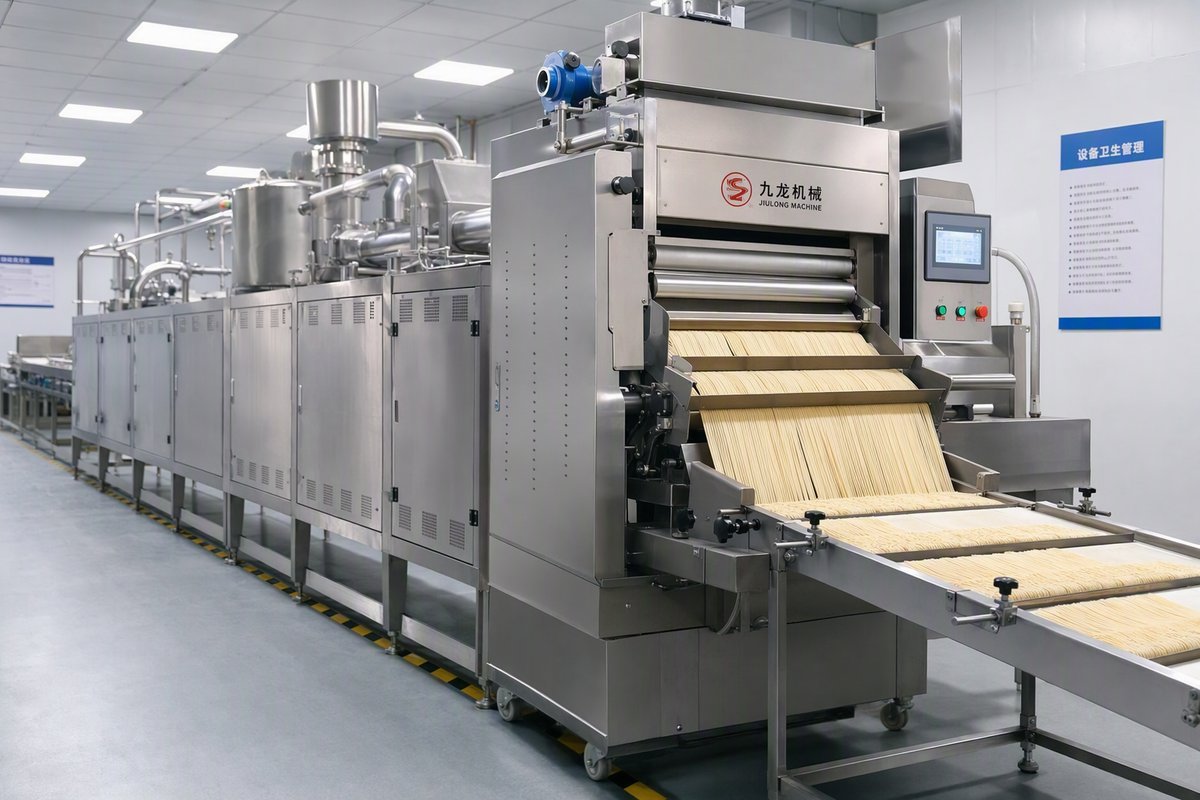

Noodle Making Machine: The Complete Guide for Commercial Noodle Production — learn how Yuerui Machinery supports your production with reliable equipment and engineering.
A noodle making machine is the backbone of any commercial noodle production operation, from small artisanal workshops to large-scale industrial factories. As global noodle consumption continues to grow—driven by the popularity of Asian cuisine, the convenience food sector, and the expansion of restaurant chains—the demand for efficient, reliable noodle production equipment has never been higher. This complete guide covers everything you need to know about commercial noodle machines, including how they work, the types available, production capacities, noodle varieties, key specifications, maintenance practices, and a comparison of different models.
How a Noodle Making Machine Works
The fundamental process of noodle production involves mixing flour with water (and sometimes salt or alkaline agents) to form a dough, sheeting the dough into thin layers, and cutting the sheets into noodles of the desired width. A commercial noodle making machine automates this process through the following stages:
Stage 1: Dough Mixing
Flour and liquid ingredients are combined in a mixing trough. The mixer kneads the ingredients until a homogeneous, properly developed dough is formed. Proper gluten development at this stage is essential—the dough must be elastic enough to sheet without tearing, yet firm enough to hold its shape after cutting. Some machines include built-in mixers, while others require a separate commercial dough mixer.
Stage 2: Dough Sheeting
The mixed dough is passed through a series of rollers that progressively reduce its thickness. Most commercial machines use multiple roller pairs, each set closer together than the previous one. This progressive sheeting process produces a smooth, uniform dough sheet with consistent thickness—critical for even cooking and a uniform product appearance.
Stage 3: Noodle Cutting
The final set of rollers includes cutting blades that slice the dough sheet into individual noodles. The width of the cutting blades determines the noodle width, and most machines come with interchangeable cutting roller sets to produce different noodle styles—from thin vermicelli to wide flat noodles.
Stage 4: Cutting to Length and Output
The continuous noodle strand is cut to a predetermined length by a cutting mechanism, then conveyed out of the machine. In fully automated lines, the noodles proceed to a drying tunnel, boiling station, or packaging area depending on the end product.
For a reliable, high-quality noodle production solution, Yuerui Machinery offers a dedicated noodle making machine designed for commercial-scale fresh noodle production with adjustable thickness and width settings.
Types of Noodle Making Machines
Commercial noodle machines are categorized by their level of automation, production method, and the type of noodles they produce. Understanding these categories helps you select the right equipment for your production goals.
Manual/Hand-Crank Noodle Machines
These entry-level machines are operated by hand-cranking the rollers. They are suitable for small restaurants, noodle shops, and home-based businesses with very low production volumes. While affordable, they are labor-intensive and cannot meet the demands of commercial production.
Semi-Automatic Noodle Machines
Semi-automatic machines motorize the sheeting and cutting functions but require manual dough feeding and noodle collection. They strike a balance between affordability and productivity, making them popular among small to mid-size noodle producers and restaurants that make fresh noodles on-site.
Fully Automatic Noodle Machines
Fully automatic machines handle the entire process from dough mixing to noodle cutting with minimal operator intervention. They may include automatic flour feeding, dough mixing, multi-stage sheeting, cutting, and conveying. These machines are designed for continuous production and are the standard choice for mid to large-scale noodle factories.
Multi-Functional Noodle Machines
Some machines are designed to produce multiple types of noodle products beyond standard wheat noodles. The multi-functional cold noodle machine, for example, can produce cold skin noodles (liangpi), a popular Chinese street food product, in addition to standard noodle varieties. This versatility allows producers to diversify their product range with a single equipment investment.
Noodle Types and Production Applications
Different noodle types require different machine configurations and processing parameters. The table below summarizes the main noodle categories and their production requirements:
| Noodle Type | Dough Characteristics | Key Machine Requirements |
|---|---|---|
| Fresh noodles | High moisture (30–35%), soft dough | Standard sheeting and cutting; conveyor output |
| Dried noodles | Lower moisture (28–30%), firmer dough | Cutting + integration with drying line |
| Instant noodles | Alkaline dough, fried or dried | Steaming, cutting, folding, frying/drying integration |
| Ramen noodles | Alkaline (kansui) dough, low moisture | Precise thickness control; aging section |
| Rice noodles | Rice flour batter, extruded | Extrusion system, different from wheat noodle machines |
| Cold skin noodles (liangpi) | Batter-based, steamed sheets | Steaming and cutting system; specialized machine |
Before purchasing a noodle making machine, confirm that it can produce the specific noodle types you intend to manufacture. Some machines are optimized for wheat-based noodles, while others are versatile enough to handle multiple dough types.
Production Capacity of Commercial Noodle Machines
Production capacity is one of the most important specifications to consider. Noodle machine capacity is typically expressed in kilograms of noodles produced per hour (kg/hr). The following capacity tiers serve as a general guide:
- Small-scale (50–100 kg/hr): Suitable for restaurants, noodle shops, and small fresh noodle producers serving local markets.
- Mid-range (100–200 kg/hr): Ideal for regional distributors, food service suppliers, and mid-size noodle factories supplying restaurants and retail.
- Industrial-scale (200–500+ kg/hr): Designed for large factories supplying wholesale distributors, export markets, and supermarket chains.
When selecting capacity, factor in not only your current demand but also anticipated growth, product diversification plans, and the machine’s ability to operate in continuous production shifts. Also consider that real-world output may be 80–90% of the rated capacity due to dough preparation time, cleaning intervals, and operator proficiency.
Key Specifications to Evaluate
Roller Width and Diameter
Roller width determines the maximum dough sheet width, which in turn affects production output. Wider rollers allow more noodles to be cut per pass. Common roller widths range from 150 mm for small machines to 300 mm or more for industrial models. Roller diameter affects the pressure applied to the dough—larger diameter rollers generally provide more uniform sheeting.
Adjustable Thickness Range
The ability to adjust dough sheet thickness is essential for producing different noodle varieties. Most machines offer thickness settings from 0.5 mm (for thin vermicelli) to 3–5 mm (for thick udon-style noodles). Look for machines with precise, repeatable thickness adjustment mechanisms.
Cutting Roller Options
Interchangeable cutting rollers allow you to produce noodles of different widths. Common options include round (vermicelli), thin (1–2 mm), medium (2–3 mm), and wide (4–6 mm+) cutting profiles. Check the availability and cost of additional cutting rollers when comparing machines.
Motor Power
Motor power directly affects production speed and the machine’s ability to handle firmer doughs. Small machines may use 0.5–1.5 kW motors, while industrial models use 3–5.5 kW or more. Ensure the motor is from a reputable brand and that replacement parts are readily available.
Material Construction
Food contact surfaces should be made from food-grade 304 or 316 stainless steel. The rollers may be chrome-plated steel or stainless steel. Avoid machines with painted or coated surfaces in food contact areas, as these can chip and contaminate the product.
Dough Moisture and Flour Type Compatibility
Different noodle machines are optimized for different dough moisture ranges. Fresh noodle machines typically handle dough with 30–35% moisture, while dried noodle machines work with lower-moisture doughs (28–30%). Some machines are designed specifically for high-gluten flour, while others can accommodate various flour types including all-purpose, bread flour, and specialty noodle flour.
Comparison of Different Noodle Machine Models
| Feature | Semi-Automatic | Fully Automatic | Multi-Functional |
|---|---|---|---|
| Automation Level | Motorized sheeting/cutting; manual feeding | Full automation from mixing to output | Full automation; multiple product types |
| Typical Capacity | 50–150 kg/hr | 150–300+ kg/hr | 100–200 kg/hr |
| Footprint | Compact | Medium to large | Medium |
| Price Range | Entry-level | Mid to high | Mid-range |
| Best For | Noodle shops, small producers | Mid to large noodle factories | Producers diversifying product range |
| Operator Skill Required | Low to moderate | Moderate | Moderate to high |
The right choice depends on your production volume, product range, budget, and available floor space. For many growing businesses, starting with a versatile semi-automatic or mid-range fully automatic model offers the best balance of productivity and investment risk.
Maintenance and Care for Noodle Making Machines
Proper maintenance extends the life of your noodle machine and ensures consistent product quality. Implement the following maintenance practices:
Daily Maintenance
- Remove all residual dough from rollers, cutting blades, and conveyor surfaces after each production run.
- Wipe down all surfaces with a clean, damp cloth. Use food-grade sanitizer on non-lubricated food contact surfaces.
- Allow the machine to dry completely before the next use to prevent bacterial growth.
- Inspect cutting rollers for dough buildup in the blade grooves and clean with a soft brush.
Weekly Maintenance
- Check belt tension and alignment on drive systems; adjust or replace worn belts.
- Apply food-grade lubricant to bearings, chains, and gears according to the manufacturer’s schedule.
- Inspect roller surfaces for scratches, pitting, or wear that could affect dough sheet quality.
- Tighten all bolts and fasteners; vibration during operation can loosen connections over time.
Monthly and Seasonal Maintenance
- Inspect motor brushes (on brushed motors) and replace if worn.
- Check electrical connections and wiring for signs of wear or heat damage.
- Calibrate thickness adjustment mechanisms for accuracy.
- Order replacement parts proactively for components showing wear, such as cutting rollers and bearings.
Maintaining a detailed maintenance log helps track service intervals, identify recurring issues, and plan for major service before unexpected breakdowns occur during production.
Tips for Producing High-Quality Commercial Noodles
Beyond the machine itself, several factors influence the quality of the finished noodles:
- Flour selection: Use flour with 11–13% protein content for optimal gluten development. Higher protein produces chewier noodles; lower protein produces softer noodles.
- Water temperature: Cold water (below 20°C) produces firmer, more elastic dough. Warm water produces softer dough suitable for certain noodle types.
- Dough resting: Allow the mixed dough to rest for 20–30 minutes before sheeting. Resting relaxes the gluten, making the dough easier to sheet and reducing shrinkage.
- Sheeting passes: For the smoothest, most uniform noodles, pass the dough through progressively thinner roller settings rather than attempting to reach the final thickness in a single pass.
- Dusting: Lightly dust the cut noodles with flour or starch to prevent sticking during storage and packaging.
For producers interested in expanding beyond standard wheat noodles, the cold noodle machine opens up the cold skin noodle (liangpi) market, which has growing demand in both domestic and international Asian food markets.
Choosing the Right Noodle Making Machine for Your Business
To select the best noodle making machine for your operation, follow this decision framework:
- Define your product range – List all noodle types you plan to produce now and within the next 2–3 years.
- Determine your daily production target – Calculate the kilograms of noodles needed per day, including a 25% growth buffer.
- Assess your facility – Measure available floor space, check power supply (voltage and phase), and verify water access.
- Set your budget – Determine your total equipment budget including installation, training, and spare parts.
- Research suppliers – Compare at least two to three suppliers on specifications, price, warranty, and after-sales support.
- Request a demonstration – If possible, visit the supplier’s facility or request a video demonstration of the machine in operation.
- Verify certifications – Confirm the machine meets food safety standards required for your target markets (CE, FDA, ISO).
For a consultation on selecting the right noodle production equipment, contact Yuerui Machinery. Their team can help you assess your production requirements and recommend the most suitable machine configuration for your business.
Conclusion
A noodle making machine is a critical investment for any commercial noodle production operation. By understanding how these machines work, the types available, production capacities, noodle varieties, key specifications, and maintenance requirements, you can make an informed purchasing decision that supports your business goals. Whether you are a small restaurant producing fresh noodles for immediate service or a large factory supplying dried noodles to retail chains, selecting the right machine—and maintaining it properly—will determine your product quality, production efficiency, and long-term profitability. Take the time to evaluate your needs thoroughly, compare options, and partner with a reliable equipment supplier to ensure your noodle production operation achieves its full potential.