Professional Food Processing Machinery Manufacturer

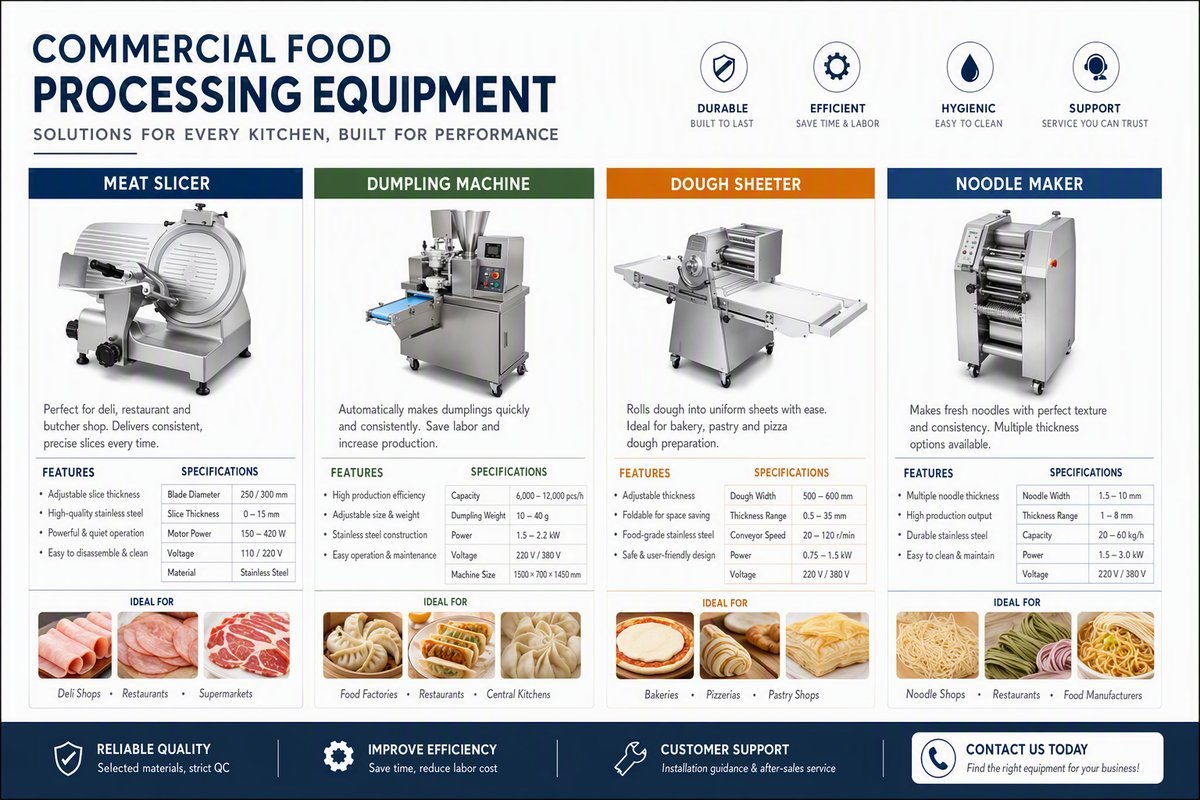

How to Choose Commercial Food Processing Equipment: A Complete Buying Guide — learn how Yuerui Machinery supports your production with reliable equipment and engineering.
Selecting the right commercial food processing equipment is one of the most consequential decisions a food business owner or production manager will make. The equipment you choose directly impacts product quality, production efficiency, labor costs, food safety compliance, and ultimately, the profitability of your operation. Whether you are launching a new food production facility, expanding an existing line, or upgrading outdated machinery, this comprehensive buying guide walks you through every critical factor to consider before making your investment.
Key Factors When Buying Commercial Food Processing Equipment
1. Production Capacity
The first and most fundamental question is: how much product do you need to produce per hour, per shift, or per day? Production capacity should be determined by your current demand plus a realistic growth buffer of 20–30%. Purchasing equipment that is undersized creates production bottlenecks, while oversized equipment wastes capital and operating costs. Consider both peak demand periods and seasonal fluctuations when calculating your required throughput.
2. Material Quality and Build Construction
Food processing equipment must withstand rigorous daily use, frequent washing, and exposure to corrosive food ingredients. The industry standard for food-grade construction is 304 or 316 stainless steel. Key points to evaluate include:
- 304 stainless steel – suitable for most general food processing applications; excellent corrosion resistance and durability.
- 316 stainless steel – recommended for environments with high salt or acid exposure, such as meat processing and seafood preparation.
- Food-grade plastics and rubber – used for seals, gaskets, and conveyor components; must meet FDA or EU food contact standards.
- Welding quality – inspect welds for smoothness and continuity; rough welds can trap food residue and harbor bacteria.
3. Power Requirements and Energy Efficiency
Commercial food machinery varies significantly in power consumption. Before purchasing, verify that your facility’s electrical supply (voltage, phase, and amperage) can support the equipment. Key considerations include:
- Motor power rating (typically measured in kW or HP)
- Voltage compatibility (220V single-phase vs. 380V three-phase)
- Energy efficiency of motors and heating elements
- Compressed air requirements for pneumatic systems
- Water supply and drainage capacity for washing and cooling
Energy-efficient equipment may carry a higher upfront cost but delivers substantial savings over the machine’s lifetime, particularly in operations running 8–16 hours per day.
4. Floor Space and Facility Layout
Equipment dimensions must fit within your available floor space while allowing sufficient clearance for operation, maintenance, and cleaning. Consider the following layout factors:
- Machine footprint (length × width × height)
- Operator access space on all sides
- Clearance for opening access panels and removing parts
- Workflow integration with upstream and downstream equipment
- Proximity to utilities (electrical panels, water lines, drainage)
A well-planned facility layout minimizes material handling, reduces cross-contamination risks, and improves overall production flow. If space is limited, consider multi-functional equipment that can perform multiple processing steps in a single unit.
5. Budget and Total Cost of Ownership
The purchase price is only one component of the total cost of ownership (TCO). A thorough budget analysis should include:
| Cost Category | Description | Estimated Range |
|---|---|---|
| Equipment purchase price | Base machine cost including standard accessories | Varies by type and capacity |
| Shipping and installation | Freight, rigging, electrical hookup, commissioning | 5–15% of purchase price |
| Spare parts inventory | Critical wear parts kept on hand | 2–5% of purchase price annually |
| Annual maintenance | Routine servicing, lubrication, part replacement | 3–8% of purchase price |
| Energy consumption | Electricity, water, compressed air | Varies by usage and local rates |
| Operator training | Initial and ongoing training costs | 1–3% of purchase price |
6. After-Sales Support and Warranty
Even the best equipment requires maintenance and occasional repair. When evaluating suppliers, assess the following support factors:
- Warranty period – typically 12–24 months; confirm what is covered (parts, labor, shipping).
- Spare parts availability – how quickly can critical parts be delivered? Are they stocked locally or shipped from overseas?
- Technical support – is phone, email, or video support available? What are the response time guarantees?
- Installation and training – does the supplier provide on-site installation and operator training?
- Service network – does the manufacturer have local or regional service technicians?
Types of Commercial Food Processing Equipment
Different food products require different processing equipment. Understanding the main categories helps you identify the right machines for your production line.
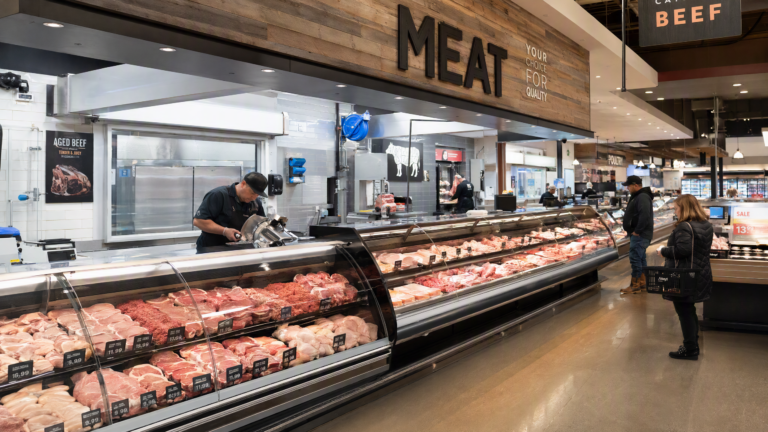
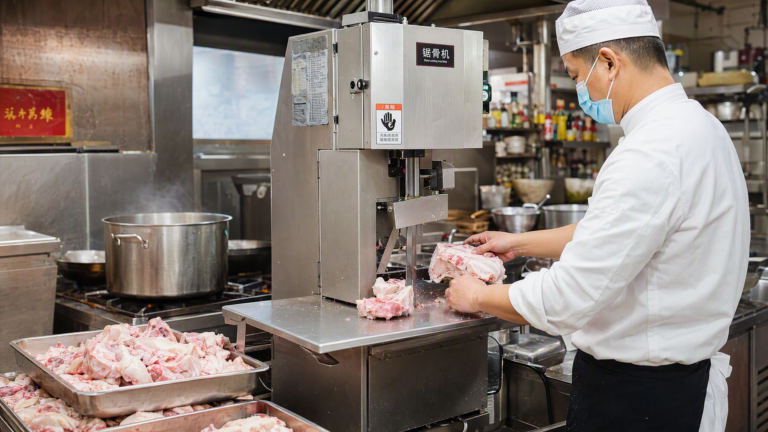
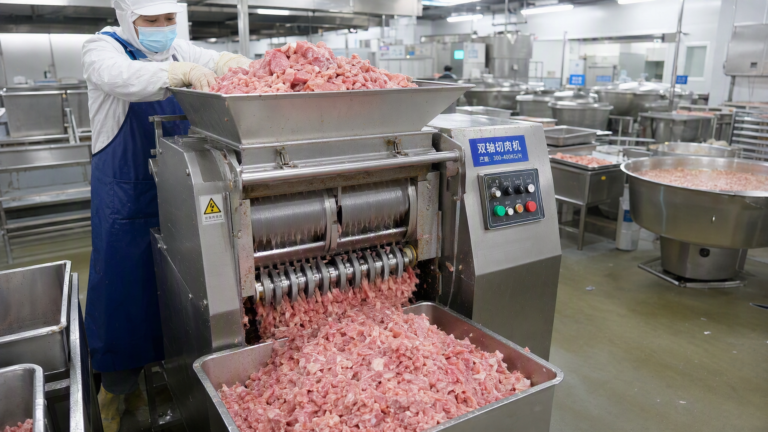
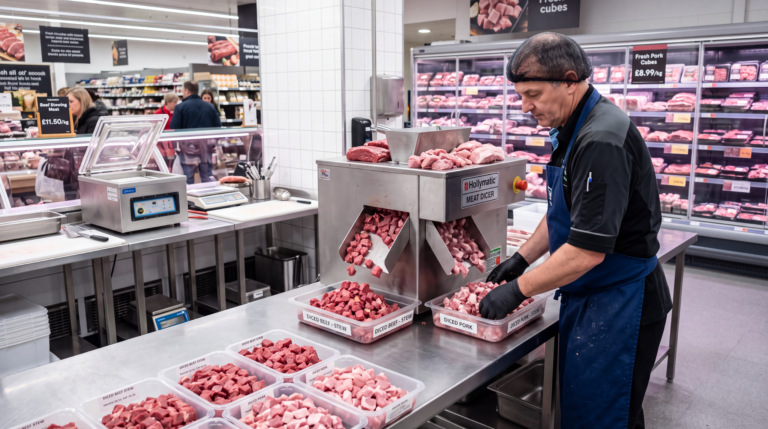
Meat Processing Equipment
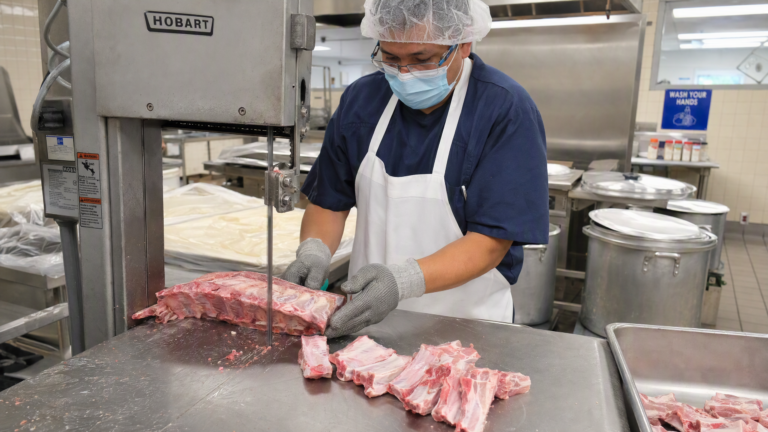
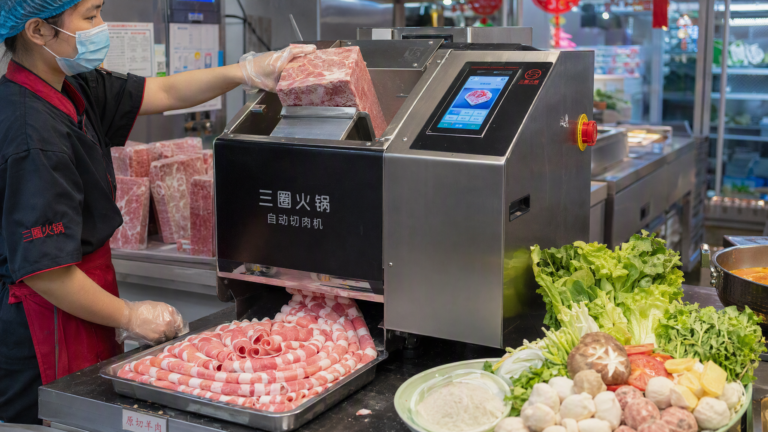
Meat processing involves grinding, slicing, mincing, and forming. Key equipment includes meat slicers, grinders, and stuffers. For commercial operations, a reliable commercial fresh meat slicer ensures uniform slices for portion control and consistent cooking results. Meat processing equipment must be constructed from high-grade stainless steel and designed for easy disassembly and cleaning to prevent cross-contamination.
Dough Processing Equipment
Dough-based products—breads, dumplings, pastries, noodles—require equipment for mixing, sheeting, dividing, and forming. Essential machines include:
- Dough sheeters – roll dough into uniform sheets for pastries, croissants, and wrappers. The commercial dough sheeter is a cornerstone of any bakery or pastry production line.
- Dough dividers – portion dough into equal weights for buns, bread, and rolls. A dough divider machine eliminates manual weighing and ensures batch consistency.
- Pancake forming machines – automate the production of flatbreads and pancakes. The automatic pancake forming machine is ideal for high-volume flatbread production.
Vegetable Processing Equipment
Vegetable preparation involves washing, peeling, cutting, and dicing. A commercial vegetable cutting machine can process a wide range of vegetables into various cuts—slices, shreds, cubes—dramatically reducing prep time in commercial kitchens and food factories. For root vegetables, a potato washing machine handles bulk cleaning efficiently.
Noodle Making Equipment
Noodle production requires specialized machines for dough mixing, sheeting, and cutting. A noodle making machine produces fresh noodles in various widths and thicknesses, while a multi-functional cold noodle machine expands production to include cold skin noodles (liangpi) and other specialty noodle products.
Common Mistakes to Avoid When Purchasing Food Equipment
Buying on Price Alone
The cheapest equipment often costs more in the long run due to frequent breakdowns, higher energy consumption, and shorter service life. Always evaluate total cost of ownership rather than initial purchase price alone.
Underestimating Future Growth
Many buyers purchase equipment that exactly meets current demand, leaving no room for growth. Within a year or two, they find themselves needing to upgrade again. Building in a capacity buffer of 20–30% from the outset saves money and disruption over time.
Neglecting Food Safety Certifications
Equipment that lacks recognized certifications (CE, FDA, ETL, ISO) may not comply with local health regulations or export requirements. Always verify that the equipment carries the necessary certifications for your target markets.
Ignoring Operator Training Needs
Sophisticated equipment requires skilled operators. Failing to budget for training leads to improper operation, increased wear, and reduced product quality. Ensure the supplier provides comprehensive training and clear operating manuals.
Overlooking Cleaning and Maintenance Accessibility
Equipment that is difficult to clean and maintain becomes a food safety liability. Inspect the machine’s design for tool-free disassembly, accessible cleaning points, and smooth surfaces without hard-to-reach crevices.
How to Calculate ROI on Food Processing Equipment
Calculating the return on investment (ROI) for commercial food processing equipment involves comparing the total investment against the expected financial benefits. Follow these steps:
Step 1: Calculate Total Investment
Sum the equipment purchase price, shipping, installation, training, and initial spare parts inventory.
Step 2: Estimate Annual Savings
Calculate savings from reduced labor costs, increased production output, reduced product waste, and energy efficiency improvements. For example, if a machine replaces 5 workers earning $3,000/month each, the annual labor savings alone would be $180,000.
Step 3: Estimate Additional Revenue
If the new equipment enables higher production volumes that generate additional sales, estimate the incremental annual revenue and gross margin contribution.
Step 4: Calculate Payback Period
Divide the total investment by the annual savings plus additional gross profit. Most food processing equipment investments show a payback period of 12 to 36 months.
| ROI Metric | Calculation Method | Target Benchmark |
|---|---|---|
| Total Investment | Equipment + installation + training + parts | — |
| Annual Savings | Labor savings + waste reduction + energy savings | — |
| Payback Period | Total Investment ÷ Annual Savings | 12–24 months (ideal) |
| 3-Year ROI | (3-Year Savings − Investment) ÷ Investment × 100% | > 150% |
Questions to Ask Equipment Suppliers Before Buying
- What is the machine’s maximum and recommended production capacity?
- What materials are used in food contact areas?
- What certifications does the equipment carry (CE, FDA, ISO)?
- What is the warranty period and what does it cover?
- How quickly can spare parts be delivered?
- Do you provide on-site installation and operator training?
- What is the expected service life of the machine?
- Can the machine be customized for specific product requirements?
- What utilities (power, water, air) does the machine require?
- Do you have references from customers with similar operations?
Asking these questions upfront helps you avoid costly surprises and ensures you select a supplier who will be a reliable partner throughout the equipment’s service life. For personalized guidance on selecting the right equipment for your specific production needs, contact Yuerui Machinery for a consultation with their technical team.
Conclusion
Choosing the right commercial food processing equipment requires careful analysis of production capacity, material quality, power requirements, facility layout, total cost of ownership, and after-sales support. By systematically evaluating each factor, understanding the different equipment categories, avoiding common purchasing mistakes, and performing a thorough ROI calculation, food business owners can make informed decisions that pay dividends for years to come. The right equipment is not just a purchase—it is a long-term investment in the quality, efficiency, and competitiveness of your food production operation. Take the time to research, compare, and consult with experienced suppliers to ensure your equipment investment delivers the performance and reliability your business demands.