Professional Food Processing Machinery Manufacturer


Commercial Fresh Meat Slicer: A Complete Comparison of Types and Models — learn how Yuerui Machinery supports your production with reliable equipment and engineering.
When it comes to processing raw meat into uniform, saleable portions, a commercial fresh meat slicer is one of the most versatile and essential machines in any meat processing facility. Unlike deli slicers designed for cooked or cured products, a fresh meat slicer is engineered specifically to handle the unique challenges of cutting raw meat—its varying texture, moisture content, and bone-in or bone-out configurations. Choosing the right commercial fresh meat slicer can dramatically improve your throughput, product consistency, and profitability.
This comprehensive comparison guide walks you through the different types of commercial fresh meat slicers, their key specifications, the blade technologies they use, and how to evaluate models for your specific production needs. Whether you are outfitting a new processing plant or upgrading existing equipment, this guide will help you make an informed decision.
What Is a Commercial Fresh Meat Slicer?
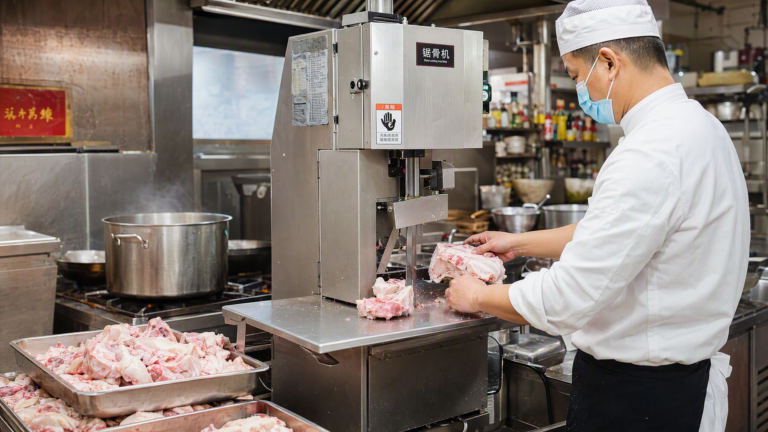
A commercial fresh meat slicer is a motorized machine designed to cut raw, uncooked meat into slices of uniform thickness. These machines are used on beef, pork, poultry, lamb, and other meats that have not been cured, smoked, or cooked. The key distinction from other types of slicers is that fresh meat slicers must handle the higher moisture content, softer texture, and potential presence of connective tissue that characterizes raw meat.
Fresh meat slicing is a critical step in many processing operations. It is used for producing stir-fry strips, schnitzel portions, shabu-shabu and hot pot slices, jerky raw material, portion-controlled retail cuts, and prepared meal ingredients. Each of these applications demands different slice thicknesses, product orientations, and throughput rates—which is why understanding the range of available slicer types is so important.
The commercial fresh meat slicer market has evolved significantly in recent years. Modern machines offer features like programmable cutting parameters, automatic product feeding, multi-blade configurations, and integrated portioning systems. These advances have made it possible for even mid-sized processors to achieve levels of precision and efficiency that were once available only to the largest industrial operations.
Types of Commercial Fresh Meat Slicers
Commercial fresh meat slicers are categorized by their cutting mechanism, automation level, and product orientation. Understanding these categories is the first step in narrowing down your options.
1. Rotary Blade Fresh Meat Slicers
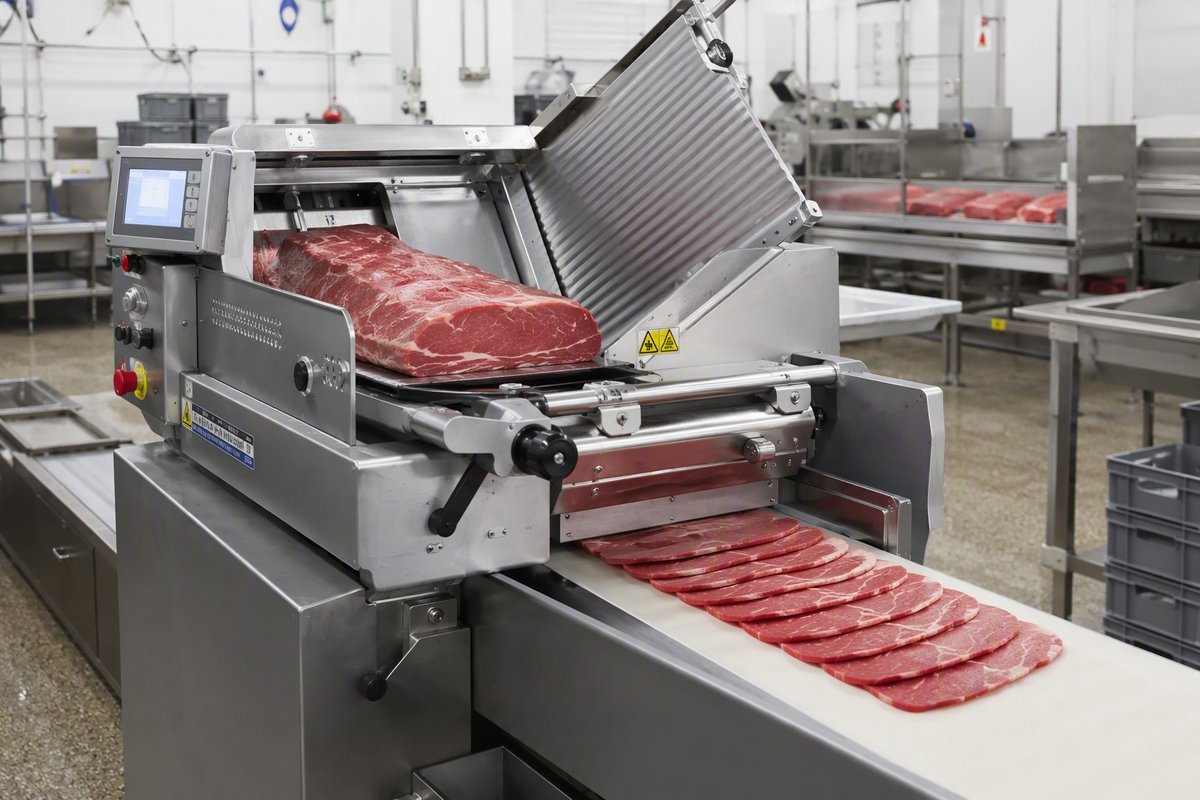
These machines use a circular rotating blade to slice meat that is fed through a chute or onto a conveyor. The blade spins at high speed, and the meat is pressed against it by a feed mechanism. Rotary blade slicers are the most common type and are suitable for a wide range of products. They excel at producing thin, uniform slices and can handle both boneless and semi-boneless cuts. Slice thickness is typically adjustable from 1mm to 25mm.
The Commercial Fresh Meat Slicer from Yuerui Machinery is a prime example of this type, offering adjustable thickness, stainless steel construction, and a throughput of up to 500 kg per hour.
2. Fresh Meat Strip Cutting Machines
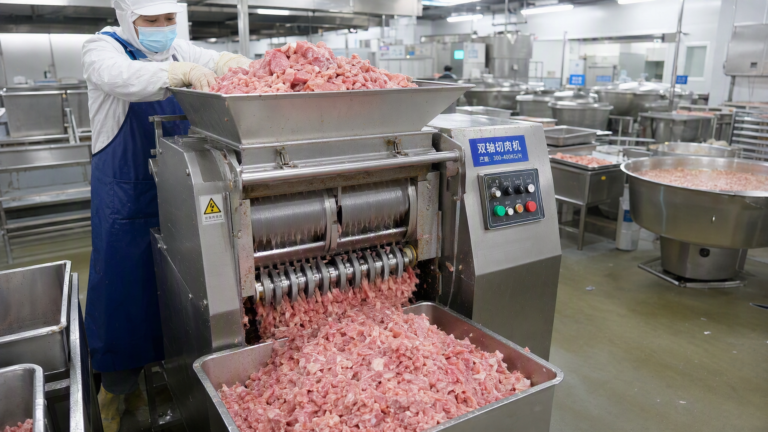
Strip cutting machines are designed specifically for producing uniform strips of fresh meat—ideal for stir-fry, fajitas, jerky preparation, and other strip-form products. These machines use a grid of blades that cuts the meat in a single pass, producing strips of consistent width and length. A Commercial Fresh Meat Strip Cutting Machine can process 300-600 kg per hour and produces strips with width adjustable from 3mm to 20mm.
3. Dual-Function Slicer and Strip Cutters
Some machines offer both slicing and strip cutting capabilities through interchangeable blade assemblies. These versatile units are popular with processors who need flexibility—producing slices for some orders and strips for others without investing in two separate machines. The trade-off is that changeover time between modes can reduce overall daily throughput.
4. Gravity-Feed Fresh Meat Slicers
Gravity-feed slicers use the weight of the product to push it against the blade. These are simpler, less expensive machines suitable for lower-volume operations. They are commonly found in butcher shops and small processing facilities where throughput requirements are modest.
5. Automatic Portion-Control Slicers
These high-end machines combine slicing with weight-based portioning. Each slice or group of slices is weighed as it is produced, and the machine adjusts cutting parameters in real time to achieve target portion weights. This technology is essential for processors supplying portion-controlled products to retail chains and food service operations where weight specifications are tightly regulated.
Blade Technology: The Heart of Every Slicer
The blade is the single most important component of any commercial fresh meat slicer. Blade type, material, sharpness, and design directly determine cut quality, product appearance, and yield. Here is what you need to know:
Blade Materials
- Stainless steel (420J2 or equivalent): The industry standard for meat slicing blades. Offers good corrosion resistance, holds a sharp edge well, and is relatively easy to sharpen. Suitable for most fresh meat applications.
- High-carbon stainless steel: Harder than standard stainless, holds an edge longer, but is more susceptible to corrosion if not properly maintained. Best for high-volume operations with consistent maintenance routines.
- Titanium-coated blades: Feature a titanium nitride coating that increases surface hardness and reduces friction. The reduced friction is particularly beneficial for fresh meat, which tends to stick to blades due to its moisture content.
Blade Designs
- Plain edge: Produces clean, smooth cuts ideal for most fresh meat applications. The most versatile blade type.
- Serrated edge: Better for cutting through tough connective tissue or skin-on products. However, serrated blades produce a rougher cut surface and are harder to sharpen.
- Hollow ground: Features a concave grind that reduces friction and sticking. Excellent for fresh meat, which is prone to adhering to the blade surface. Hollow ground blades are the preferred choice for high-quality fresh meat slicing.
Blade Diameter and Speed
Blade diameter typically ranges from 250mm to 400mm for commercial fresh meat slicers. Larger blades can handle bigger product pieces and generally run at lower RPM, which reduces heat generation and product smearing. Blade speed is typically 1,000-3,000 RPM. Machines with variable speed control offer the flexibility to optimize cutting performance for different meat types and temperatures.
Key Specifications to Consider
Beyond blade technology, several other specifications determine whether a particular commercial fresh meat slicer is right for your operation:
- Cutting thickness range: Most fresh meat slicers offer 1-25mm adjustable thickness. Consider the full range of products you produce—if you need very thin slices (1-2mm for hot pot) and very thick portions (20mm+ for chops), ensure the machine can handle both extremes.
- Throughput capacity: Ranges from 100 kg/hr for entry-level machines to 800+ kg/hr for industrial models. Match capacity to your peak production requirements, not just average daily volume.
- Maximum product dimensions: The feed chute or conveyor must accommodate your largest product pieces. Check both length and cross-sectional dimensions.
- Motor power: Typically 0.75kW to 3kW. Higher power handles denser products and maintains cutting speed under load, but also increases energy costs.
- Product temperature range: Fresh meat is typically processed at 0-4°C. Some slicers are designed to handle slightly frozen meat (-2°C to -5°C), which produces cleaner cuts but requires more cutting force. Verify the machine’s capability if you plan to process tempered or slightly frozen product.
- Material construction: 304 food-grade stainless steel for all food-contact surfaces is non-negotiable. Check that the frame, conveyor, blade housing, and discharge chute are all stainless.
- Washdown rating: Look for IP65 or higher for the ability to pressure-wash the machine during cleaning. This is critical for maintaining food safety standards in a fresh meat environment.
- Automation features: Consider whether you need programmable cutting parameters, automatic product feeding, or integrated portion weighing. These features add cost but can significantly improve efficiency and consistency.
Commercial Fresh Meat Slicer Comparison Table
The following table compares the main types of commercial fresh meat slicers across key performance dimensions:
| Specification | Rotary Blade Slicer | Strip Cutting Machine | Dual-Function Slicer | Portion-Control Slicer |
| Cutting Type | Slices (adjustable thickness) | Strips (fixed width grid) | Slices + Strips (changeable) | Weight-based portions |
| Throughput (kg/hr) | 200-500 | 300-600 | 200-400 | 150-350 |
| Thickness/Width Range | 1-25 mm | 3-20 mm | 1-25 mm / 3-20 mm | 1-25 mm |
| Motor Power | 1.1-2.2 kW | 1.5-2.2 kW | 1.5-2.2 kW | 2.2-3.0 kW |
| Blade Type | Single circular blade | Multi-blade grid | Interchangeable assemblies | Single blade + scale |
| Automation Level | Semi-automatic | Semi-automatic | Semi-automatic | Fully automatic |
| Best For | General fresh meat slicing | Stir-fry strips, jerky prep | Multi-product processors | Retail portion control |
| Price Range (USD) | $3,000-$8,000 | $4,000-$10,000 | $5,000-$12,000 | $10,000-$30,000+ |
Applications and Use Cases
A commercial fresh meat slicer serves a wide variety of processing applications. Understanding how different industries use these machines will help you identify the features that matter most for your operation.
Hot Pot and Shabu-Shabu Meat Processing
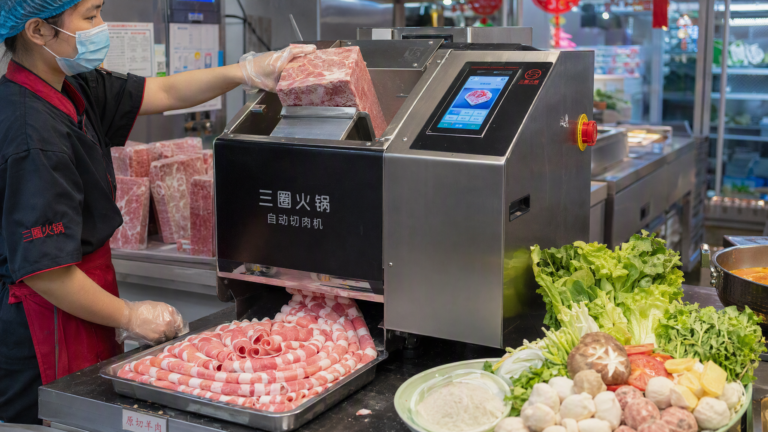
The hot pot and shabu-shabu industry is one of the largest consumers of fresh meat slices. These applications require extremely thin slices (1-3mm) of beef, lamb, or pork that cook instantly in boiling broth. Producing these slices requires a slicer with precise thickness control and the ability to handle slightly frozen meat for clean cuts. High throughput is essential because hot pot restaurants and their suppliers process large volumes daily.
Stir-Fry and Prepared Meal Manufacturing
Ready-meal manufacturers and central kitchens supplying Asian restaurants need uniform meat strips for stir-fry dishes. A strip cutting machine or dual-function slicer is ideal for this application. Consistent strip dimensions ensure even cooking, which is critical for food safety and product quality in prepared meals.
Jerky Production
Beef jerky producers need uniform slices or strips of fresh meat that will dry evenly. Inconsistent thickness leads to uneven drying—thin pieces become brittle while thick pieces remain under-dried, creating food safety risks. A commercial fresh meat slicer with precise thickness control is essential for producing high-quality jerky at scale.
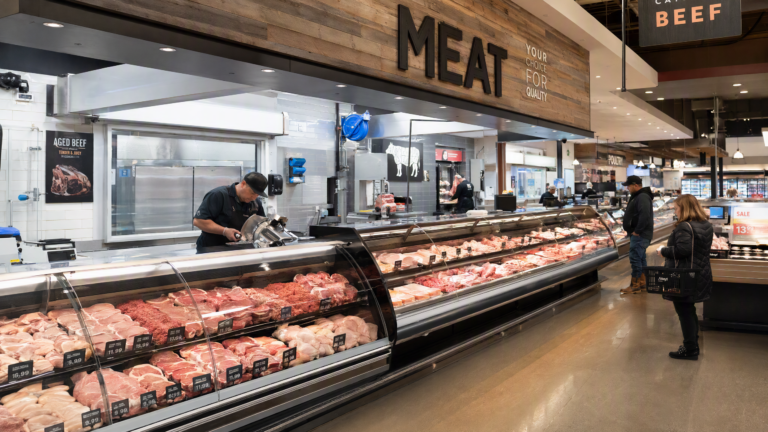
Retail Butcher Shops and Supermarket Meat Departments
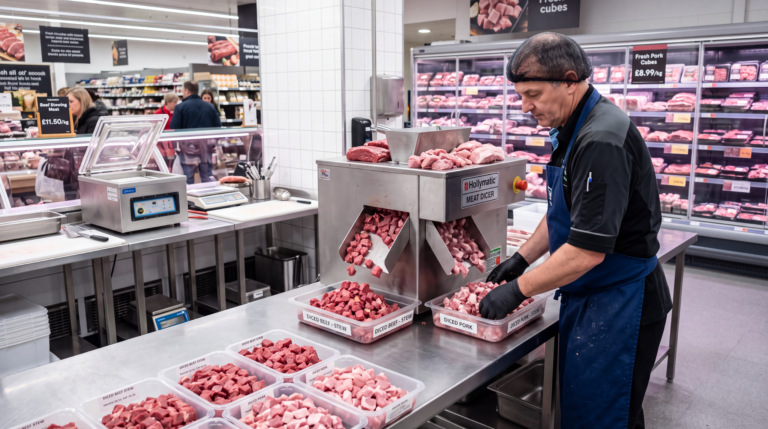
Butcher shops and supermarket meat departments use fresh meat slicers to produce portion-controlled cuts for display and sale. Portion-control slicers that can produce weight-accurate packages are increasingly popular in retail settings where pricing is per-package rather than per-weight.
Food Service and Catering
Catering companies and institutional food service operations (schools, hospitals, military) use fresh meat slicers to prepare large volumes of portion-controlled meat for cooking. These operations prioritize throughput and ease of cleaning, as they often process multiple meat types in a single day.
Fresh Meat Slicer vs. Deli Meat Slicer: Key Differences
One of the most common questions from buyers is whether they can use a single slicer for both fresh and cooked/cured meat. While some versatile machines can handle both, there are important differences to understand:
- Product temperature: Fresh meat is typically processed at 0-4°C, while deli meats may be at room temperature or slightly chilled. The machine’s feed mechanism must be designed for the moisture and softness of cold fresh meat.
- Cut surface quality: Fresh meat requires a cleaner cut to prevent moisture loss and bacterial growth on the cut surface. Hollow ground blades are preferred for fresh meat; plain edge blades are acceptable for deli meat.
- Cross-contamination risk: Processing raw and cooked meat on the same machine requires thorough cleaning between products. Many facilities use dedicated machines for fresh and cooked meat to eliminate this risk entirely. A dedicated Deli Meat Slicer alongside a fresh meat slicer is the preferred setup for dual-product facilities.
- Slice thickness range: Deli slicers typically produce very thin slices (0.5-3mm), while fresh meat slicers need a broader range (1-25mm) to accommodate different products.
For a broader comparison that includes additional meat cutting equipment types, you can also refer to the Meat Slicer Machine product page, which covers the full spectrum of meat slicing solutions.
Maintenance Tips for Commercial Fresh Meat Slicers
Fresh meat slicers operate in a challenging environment—cold, wet, and exposed to raw meat juices. Proper maintenance is essential for food safety, cutting performance, and equipment longevity.
Daily Maintenance Routine
- Disassemble and clean after each shift: Remove the blade guard, feed chute, and conveyor components. Wash all parts with hot water (82°C minimum) and food-grade detergent. Sanitize with an approved food-contact sanitizer.
- Inspect and sharpen the blade: A sharp blade is critical for clean cuts and product quality. Check the blade edge at the start of each shift. If the edge feels dull or produces torn slices, sharpen immediately using the manufacturer-recommended sharpening stone or honing tool.
- Check the thickness adjustment mechanism: Ensure the thickness dial moves smoothly and locks securely. A loose adjustment mechanism leads to inconsistent slice thickness.
- Lubricate food-grade points: Apply NSF-certified food-grade lubricant to the blade shaft, feed mechanism pivot points, and conveyor bearings. Never use non-food-grade lubricants on any component that could contact meat.
- Test safety features: Verify that the emergency stop button, blade guard interlock, and motor overload protection all function correctly before starting production.
Weekly Maintenance
- Deep clean internal components: Remove side panels to access the blade drive mechanism and motor housing. Clean any meat residue that has migrated past the primary seals.
- Check belt and chain drives: Inspect for wear, proper tension, and alignment. Worn belts reduce cutting power and can produce inconsistent results.
- Inspect electrical components: Check for moisture in the control panel, damaged cables, or corroded terminals. Fresh meat processing environments are hard on electrical components.
Monthly Maintenance
- Replace or professionally sharpen the blade: Even with daily honing, blades need periodic professional sharpening or replacement. A blade that has been sharpened too many times will have reduced diameter and may not cut properly.
- Check motor performance: Measure motor amperage under load. Compare to the manufacturer’s specification. Higher-than-normal amperage indicates increased friction or a failing bearing.
- Calibrate thickness settings: Use a calibrated thickness gauge to verify that the actual slice thickness matches the dial setting. Drift in this calibration leads to product non-conformance.
Buying Guide: How to Choose the Right Commercial Fresh Meat Slicer
Choosing the right commercial fresh meat slicer requires a systematic approach. Follow this step-by-step framework to ensure you select the best machine for your operation:
Step 1: Define Your Product Requirements
List every product you currently produce or plan to produce on the slicer. For each product, note the meat type, typical product dimensions, required slice/strip thickness, and daily volume. This product matrix is your primary specification document—it tells you exactly what the machine must be able to do.
Step 2: Calculate Your Required Throughput
Determine your peak daily production volume and divide by your available production hours. Add a 25% buffer for growth and efficiency losses. For example, if you need to process 1,000 kg per day in a 6-hour production window, your required throughput is: 1,000 kg / 6 hours = 167 kg/hr, plus 25% buffer = 209 kg/hr minimum. Select a machine rated for at least this capacity.
Step 3: Choose the Right Slicer Type
Based on your product matrix, determine which slicer type(s) you need. If all your products are slices, a rotary blade slicer is sufficient. If you need strips, consider a dedicated strip cutter or a dual-function machine. If portion control is critical, invest in a portion-control slicer.
Step 4: Evaluate Blade Specifications
Select the blade material, design, and diameter that best suit your products. For most fresh meat applications, a stainless steel hollow ground blade of 300-350mm diameter is the optimal choice. If you process tough connective tissue, consider a serrated option. Ensure the machine offers easy blade changing and sharpening access.
Step 5: Assess Automation Needs
Determine how much automation you need based on your labor costs and production volume. Semi-automatic machines require an operator for product loading but handle the cutting automatically. Fully automatic machines with conveyor feeding and portion control minimize labor but require a higher upfront investment and more technical maintenance capability.
Step 6: Compare Total Cost of Ownership
Request quotes from multiple manufacturers and compare not just the purchase price but the 5-year total cost of ownership. Include:
- Energy consumption (kW x hours x electricity rate)
- Blade replacement cost and frequency
- Spare parts pricing and availability
- Estimated maintenance labor hours
- Expected downtime and production loss
Step 7: Verify Supplier Capability
Evaluate the manufacturer’s technical support, spare parts network, and after-sales service. Request references from customers with similar operations. If possible, arrange a demonstration with your actual product to verify performance claims before purchasing.
Common Pitfalls in Fresh Meat Slicer Selection
Even with a structured buying process, there are common mistakes that buyers make when selecting a commercial fresh meat slicer:
- Underestimating throughput requirements: Many buyers calculate throughput based on average daily volume rather than peak volume. This leads to a machine that cannot keep up during busy periods, creating a bottleneck in the production line.
- Ignoring product temperature effects: Fresh meat slicing performance is highly sensitive to product temperature. Meat that is too warm will smear and produce ragged cuts. If your temperature control is not perfect, choose a machine with sufficient power and a blade designed for challenging conditions.
- Overlooking cleaning time: A machine that produces 500 kg/hr but takes 90 minutes to clean daily may be less productive overall than a machine that produces 400 kg/hr and cleans in 30 minutes. Factor cleaning time into your efficiency calculations.
- Choosing the wrong blade for the product: A plain edge blade on a product that requires serrated cutting will produce poor results and require frequent blade changes. Match the blade to the product, not the other way around.
- Not planning for product diversification: If you anticipate adding new products in the future, choose a machine with the flexibility to handle them. Upgrading a slicer is expensive; buying a slightly more versatile machine upfront is often more cost-effective.
Conclusion
A commercial fresh meat slicer is a critical investment that directly impacts your product quality, production efficiency, and profitability. By understanding the different types of slicers—rotary blade, strip cutting, dual-function, and portion-control—and evaluating them against your specific product requirements, throughput needs, and budget, you can select a machine that will serve your operation for years to come.
The most important takeaways from this comparison guide are: define your product matrix first, calculate realistic throughput requirements with growth headroom, choose the right blade technology for your specific products, and evaluate total cost of ownership rather than purchase price alone. When you follow this framework, the right commercial fresh meat slicer will deliver consistent product quality, reduced labor costs, and a strong return on investment from day one.